
description Durham Cathedral (Overall) Overview
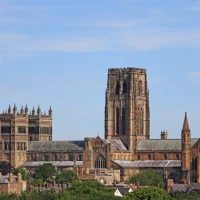
Seen as a whole, Durham Cathedral demonstrates the scale and structural ambition of Norman Romanesque architecture in England. Massive piers and rounded arches give the interior a strong sense of weight, while early ribbed vaulting shows experimentation with ways to span large stone spaces. These features make the cathedral important to the study of developments that preceded mature Gothic architecture. The wider setting, including the neighboring castle and the peninsula above the River Wear, adds to its monumental presence.
Visitors interested in medieval buildings can examine the contrast between heavy supports and the construction of the vaults overhead. Its significance is not simply as an early Gothic church, but as a Romanesque building whose structural work looked ahead. UNESCO's site description explains that distinction.
help Durham Cathedral (Overall) FAQ
Why is Durham Cathedral important in Gothic architecture?
Durham Cathedral is mainly Norman Romanesque, but its ribbed vaulting points toward later Gothic structural ideas. Construction began in 1093, making it an unusually early and powerful example of the transition from massive Romanesque forms to more ambitious vaulted space.
What parts of Durham Cathedral should architecture visitors look for?
The nave is the key space, especially the massive carved piers and early rib vaults overhead. Visitors also look for the shrine of St Cuthbert and the tomb of the Venerable Bede, which connect the building to Northumbrian religious history.
Is Durham Cathedral a UNESCO World Heritage Site?
Yes, Durham Cathedral and Durham Castle were listed together as a UNESCO World Heritage Site in 1986. The cathedral sits dramatically above the River Wear, which is part of why the whole complex feels so fortified and monumental.
How does Durham Cathedral differ from later English Gothic cathedrals?
Durham is heavier and more fortress-like than later Gothic buildings such as Salisbury Cathedral. Instead of the tall, glassy lightness of 13th-century Gothic, Durham uses thick walls, round arches, and huge piers with experimental vaulting.
explore Explore More
Similar to Durham Cathedral (Overall)
compare_arrows Compare: Durham Cathedral See all arrow_forward


Reviews & Comments
Write a Review
Be the first to review
Share your thoughts with the community and help others make better decisions.


