
description Edward Kellogg Overview
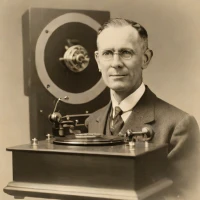
Edward Kellogg was an American engineer instrumental in developing the moving-coil dynamic loudspeaker. His work with Chester Rice at General Electric resulted in a foundational technology for audio reproduction. This design, established in 1925, remains the basis of nearly all modern loudspeakers and is utilized by audio professionals, electronics manufacturers, and anyone involved in sound amplification and playback.
help Edward Kellogg FAQ
What did Edward Kellogg co-invent?
Edward Kellogg co-invented the moving-coil dynamic loudspeaker with Chester Rice at General Electric in 1925. Their design used a voice coil and cone diaphragm in a magnetic field and became the standard architecture for audio reproduction.
Did Rice and Kellogg patent their loudspeaker design?
Yes, Rice and Kellogg received a U.S. patent for their loudspeaker design in the 1920s through their work at General Electric. The patent described the electrodynamic principle—driving a cone with a coil in a magnetic field—that remains the basis of modern speaker technology.
Where did Edward Kellogg work?
Kellogg spent his career at General Electric's research laboratory in Schenectady, New York, one of the leading industrial research centers of the era. At GE, he and Rice developed the loudspeaker that would transform radio, film sound, and consumer audio.
How does the Kellogg-Rice loudspeaker work?
Their design passes an electrical audio signal through a coil of wire suspended in a magnetic field, causing the coil and its attached cone to move back and forth, creating sound waves. This electrodynamic principle is still the core mechanism in the vast majority of speakers produced today.
explore Explore More


Reviews & Comments
Write a Review
Be the first to review
Share your thoughts with the community and help others make better decisions.


