
description ESP32-MESH Development Board Overview
For hobbyists, rapid prototyping, and academic research, the ESP32 platform offers incredible value. While not always the most optimized for ultra-low power mesh, its massive community support, integrated Wi-Fi/Bluetooth, and low cost make it unbeatable for getting a proof-of-concept running quickly. It's the go-to choice when budget and speed-to-market are the primary concerns.
help ESP32-MESH Development Board FAQ
Can I build a low-power mesh network using an ESP32 development board?
Yes, you can use the ESP32's built-in Bluetooth Low Energy (BLE) or Espressif's proprietary ESP-MESH protocol to connect multiple boards. However, the ESP32 is not inherently optimized for ultra-low power sleep states compared to dedicated radio chips.
What software environment is used to program the ESP32?
The ESP32 is most commonly programmed using the Arduino IDE, which is heavily supported by a massive community of hobbyists. For more advanced users, it also natively supports Espressif's ESP-IDF (IoT Development Framework) via FreeRTOS.
Does the ESP32 include built-in Wi-Fi?
Yes, the ESP32 chip features integrated 802.11 b/g/n Wi-Fi as well as dual-mode Bluetooth. This dual-radio capability is what makes it so popular for rapid prototyping of IoT devices.
What is a common alternative to the ESP32 for battery-powered mesh networking?
The nRF52 series from Nordic Semiconductor is a very common alternative when strict ultra-low power consumption is required. While it lacks built-in Wi-Fi, its BLE mesh capabilities are vastly superior for coin-cell battery applications.
explore Explore More
Similar to ESP32-MESH Development Board
compare_arrows Compare: Arduino Nano 33 BLE Sense See all arrow_forward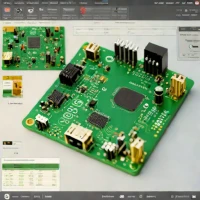


Reviews & Comments
Write a Review
Be the first to review
Share your thoughts with the community and help others make better decisions.


