
description Hercules moth Overview
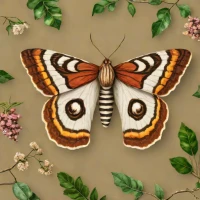
The Hercules moth is a massive Australian silkmoth belonging to the Saturniidae family. It’s notable for being one of the largest moths in the world, with wingspans reaching up to 30 centimeters. Males are particularly striking due to their vibrant blue coloration. These moths are primarily nocturnal and rely on females for mating.
They are fascinating subjects for lepidopterists and wildlife enthusiasts interested in Australian biodiversity.
help Hercules moth FAQ
What is the wingspan of a Hercules moth?
The Hercules moth (Coscinocera hercules), native to Australia and New Guinea, has an incredibly massive wingspan that can reach up to 27 centimeters (about 10.6 inches). The females are particularly large, holding the record for the largest wing surface area of any moth in the world. This massive size is most prominent in the tropical rainforests of Queensland.
What do Hercules moth caterpillars eat?
The caterpillars of the Hercules moth are heavy feeders that rely primarily on the leaves of specific rainforest trees. Their favored host plants include the bleeding heart tree (Homalanthus populifolius) and the cheese tree (Glochidion). These plants provide the necessary nutrients for the caterpillars to grow to their enormous size before pupating.
How long do Hercules moths live as adults?
Like many other Saturniidae species, adult Hercules moths have a very brief lifespan, living for only about 5 to 8 days. They emerge from their cocoons without mouthparts or digestive systems, meaning they cannot feed. Their entire adult existence is dedicated solely to finding a mate and reproducing before their stored fat reserves run out.
Are Hercules moths found in Australia?
Yes, the Hercules moth is prominently found in the tropical regions of Australia, specifically within the rainforests of northern Queensland. Their distribution also extends to the islands of New Guinea and the surrounding Moluccas. In Australia, they are often observed gliding through the dense forest canopy during the warmer months.
explore Explore More


Reviews & Comments
Write a Review
Be the first to review
Share your thoughts with the community and help others make better decisions.


