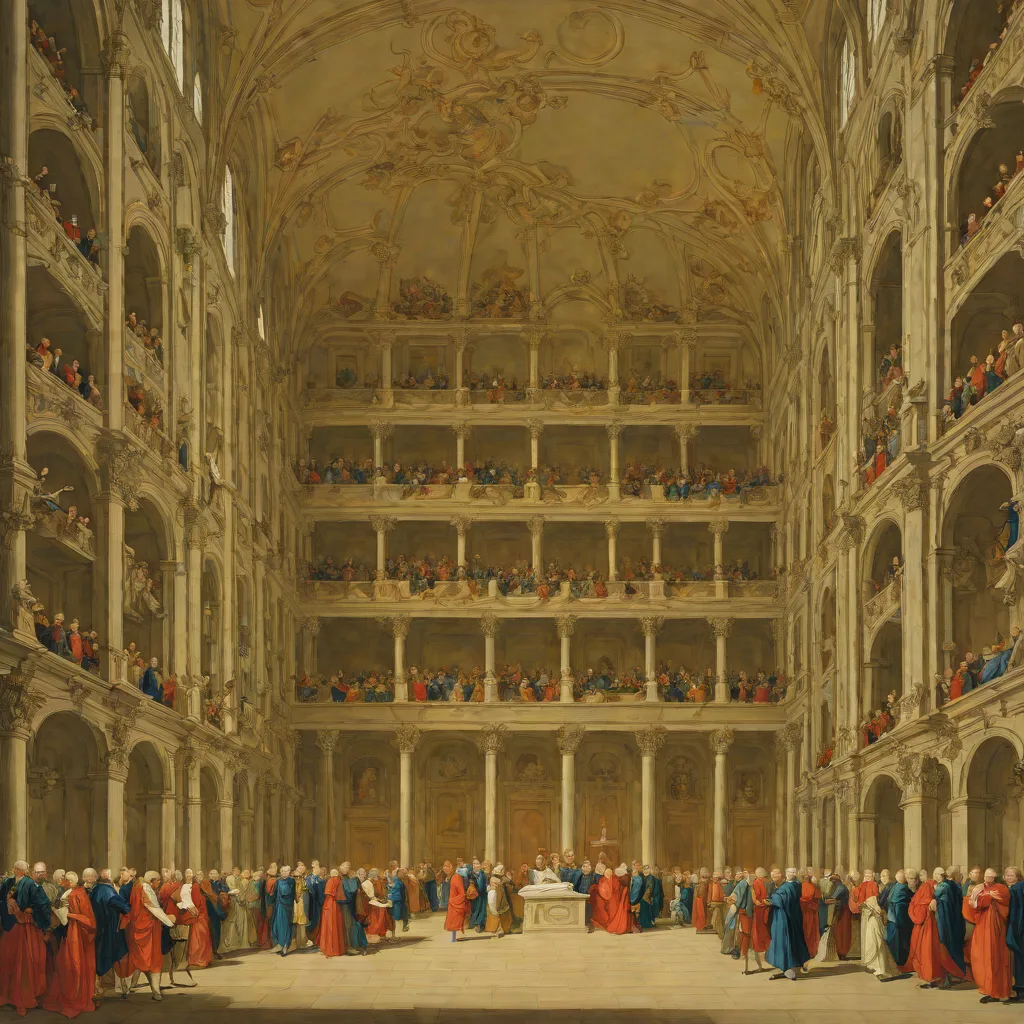
description Jeremiah Symphony (Bernstein) Overview
Leonard Bernstein's Symphony No. 1, "Jeremiah," is a three-movement work for orchestra and mezzo-soprano, completed in 1942. The movements are titled "Prophecy," "Profanation," and "Lamentation," with the solo voice entering in the finale to sing Hebrew passages adapted from the Book of Lamentations. The symphony draws on Jewish liturgical and biblical traditions while portraying warning, destruction, and mourning.
help Jeremiah Symphony (Bernstein) FAQ
What are the three movements of Bernstein's Jeremiah Symphony?
The three movements are titled 'Prophecy,' 'Profanation,' and 'Lamentation.' The first two are purely orchestral, and the mezzo-soprano soloist enters only in the final movement, singing Hebrew text drawn from the Book of Lamentations.
When did Bernstein compose the Jeremiah Symphony?
Bernstein completed the symphony in 1942, making it his first full symphony and an early landmark in his career as a serious composer. It was written when he was in his early twenties, shortly after his sensational conducting debut with the New York Philharmonic in 1943.
What Hebrew text is used in the final movement of the Jeremiah Symphony?
The 'Lamentation' movement sets Hebrew passages adapted from the biblical Book of Lamentations, traditionally attributed to the prophet Jeremiah. The text mourns the destruction of Jerusalem, and Bernstein chose it to give the symphony its deeply elegiac conclusion.
Did Bernstein conduct the premiere of the Jeremiah Symphony?
Bernstein was closely associated with the work's early performances and conducted it with major orchestras, helping establish his reputation as both composer and conductor. The symphony received the New York Music Critics' Circle Award in 1944, a significant early recognition for the young composer.
explore Explore More
Similar to Jeremiah Symphony (Bernstein)
See all arrow_forward


Reviews & Comments
Write a Review
Be the first to review
Share your thoughts with the community and help others make better decisions.