
description Lessonia nigrescens Overview
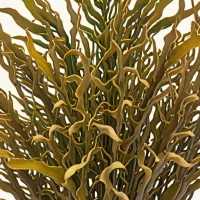
Lessonia nigrescens is a large brown kelp native to rocky coastal habitats of Chile and Peru. It forms a substantial holdfast, a durable stipe, and multiple flattened blades, allowing it to occupy exposed intertidal and shallow subtidal zones where kelp beds develop. The species is part of the South American kelp flora and has also been harvested as a source of alginate, making it relevant to marine ecology, seaweed identification, and coastal resource studies.
help Lessonia nigrescens FAQ
What is Lessonia nigrescens commonly called?
Lessonia nigrescens is commonly known as huiro negro in Chile and as black kelp in English-language sources. It grows on exposed rocky coasts of Peru and Chile, especially in the intertidal and shallow subtidal zones. [IMARPE species profile](https://biodiversidadacuatica.imarpe.gob.pe/Files/ExportarEspeciePdf?fotoId=565&taxonId=457)
How can Lessonia nigrescens be identified?
It has a substantial holdfast, one or more flattened stipes, and smooth or slightly wavy blades. Mature plants can reach around 4 metres in length, although size varies with habitat and age. [IMARPE species profile](https://biodiversidadacuatica.imarpe.gob.pe/Files/ExportarEspeciePdf?fotoId=565&taxonId=457)
Why is the name Lessonia nigrescens sometimes confusing?
Some South American plants historically called Lessonia nigrescens were later separated into the cryptic species Lessonia berteroana and Lessonia spicata. The name Lessonia nigrescens remains valid, particularly in relation to populations near its type locality around Cape Horn. [Taxonomic study](https://pmc.ncbi.nlm.nih.gov/articles/PMC6754978/)
What role does Lessonia nigrescens play in coastal ecosystems?
Dense belts of this kelp change the structure of shallow rocky habitats and provide settlement surfaces, refuge for juvenile animals, and habitat for invertebrates and fish. Its beds are also part of the commercially harvested Lessonia resource in Chile and Peru. [IMARPE species profile](https://biodiversidadacuatica.imarpe.gob.pe/Files/ExportarEspeciePdf?fotoId=565&taxonId=457)
explore Explore More


Reviews & Comments
Write a Review
Be the first to review
Share your thoughts with the community and help others make better decisions.


