
description Morel Overview
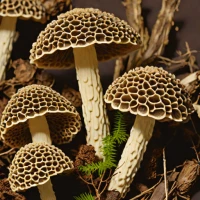
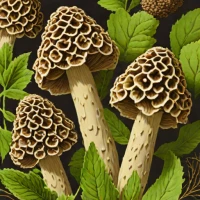
A deeply pitted cap gives morels their familiar honeycomb appearance. These edible fungi belong to the genus Morchella and have hollow fruiting bodies, with the cap and stem forming a connected interior. They are associated with spring foraging across much of North America, often in wooded areas, although habitat varies between species. Their earthy flavor and brief seasonal availability make them valued ingredients in gourmet cooking.
Morels suit cooks interested in wild mushrooms and experienced foragers who can identify them correctly. Their folds hold sauces well, while their flavor works in preparations that do not overwhelm the mushroom. They must be cooked before eating, and resemblance to potentially toxic false morels makes identification important. Beyond the kitchen, their seasonal search forms part of established foraging practices and local culinary traditions.
help Morel FAQ
What time of year is best for hunting morel mushrooms?
Morels typically emerge in the spring, usually between March and May, depending on the local climate and elevation. Foragers look for them when soil temperatures consistently reach around 50 to 60 degrees Fahrenheit.
Where do morel mushrooms usually grow in the wild?
In North America, these mushrooms are commonly found in wooded areas, frequently sprouting near dead or dying elm, ash, sycamore, and apple trees. They thrive in moist environments, particularly south-facing slopes early in the season.
Can you cultivate morel mushrooms commercially like button mushrooms?
Historically, morels were nearly impossible to farm commercially, though a few indoor cultivation methods have recently seen limited success. Because they form complex symbiotic relationships with tree roots in the wild, the vast majority consumed by chefs are still wild-foraged.
Are there poisonous mushrooms that look like morels?
Yes, foragers must be careful of "false morels" (such as Gyromitra esculenta), which look somewhat similar but contain toxic compounds. True morels are completely hollow inside and attached directly to the stem, whereas false morels are filled with cottony fibers.
explore Explore More


Reviews & Comments
Write a Review
Be the first to review
Share your thoughts with the community and help others make better decisions.


