
description Sally Lightfoot Crab Overview
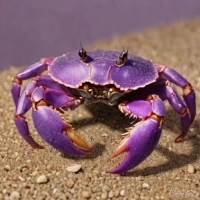
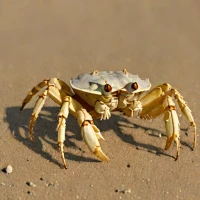
The Sally Lightfoot crab, Grapsus grapsus, is an intertidal shore crab found along the Pacific coasts of the Americas and on offshore islands including the Galápagos. Adults have conspicuous red, orange, yellow, and blue coloration, while younger individuals are darker and better camouflaged against volcanic rock. It feeds largely on algae and organic material and uses its flattened body and agile legs to move quickly across wave-washed surfaces.
help Sally Lightfoot Crab FAQ
Why is it called the Sally Lightfoot crab?
The origin of the name "Sally Lightfoot" is uncertain, but it is believed to reference the crab's incredible agility and speed on rocky shorelines. Some legends suggest it is named after a famous Caribbean dancer, owing to the crustacean's light, darting movements. The name perfectly describes their ability to seemingly skip across the water's surface to escape predators.
Where can you find Sally Lightfoot crabs?
Sally Lightfoot crabs are native to the Pacific coast of the Americas, ranging from Baja California all the way down to Peru. They are also famously abundant on the Galapagos Islands, where they are a common sight for tourists. They thrive on rocky coastlines and lava rocks near the ocean's intertidal spray.
Are Sally Lightfoot crabs poisonous?
No, Sally Lightfoot crabs are not poisonous to humans, though their bright red and orange coloration might trick predators into thinking they are. In some coastal cultures, they are consumed as food, though they are notoriously difficult to catch due to their incredible speed. However, their diet of algae can sometimes make their meat taste slightly bitter.
What do Sally Lightfoot crabs eat?
Sally Lightfoot crabs are primarily herbivores, feeding mostly on the red and green algae that grows on the coastal rocks. However, they are opportunistic feeders and will occasionally eat dead fish, barnacles, or even bird droppings. They play a crucial role in keeping the rocky shoreline ecosystems clean.
explore Explore More


Reviews & Comments
Write a Review
Be the first to review
Share your thoughts with the community and help others make better decisions.


