
description Seltún fumaroles Overview
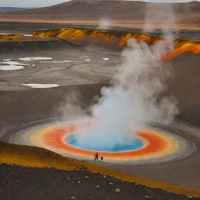
The Seltún geothermal area, situated on Iceland's Reykjanes Peninsula, is famous for its highly active fumaroles, mud pots, and vibrant, mineral-stained soils. The site is part of the larger Krýsuvík geothermal field, which sits on the Mid-Atlantic Ridge where the North American and Eurasian tectonic plates diverge. Boardwalks allow visitors to safely observe the steaming vents and bubbling pools, which produce sulfur deposits that create the area's distinctive yellow and orange coloration. Seltún represents one of Iceland's many geothermal areas that result from the country's position on a volcanic hot spot, making it a destination for geologists and tourists alike.
help Seltún fumaroles FAQ
Where are the Seltún fumaroles located?
The Seltún geothermal area is on Iceland's Reykjanes Peninsula. It forms part of the larger Krýsuvík geothermal field.
What can visitors see at Seltún?
The site is known for active fumaroles, bubbling mud pots, and ground colored by minerals. Yellow, orange, red, and green tones can appear in the soil around the vents.
Why is Seltún geothermally active?
Krýsuvík lies in Iceland's rift zone, where the North American and Eurasian tectonic plates are separating along the Mid-Atlantic Ridge. Heat and fluids rising through the volcanic ground produce the fumaroles and mud pots.
Is it safe to walk close to the Seltún fumaroles?
Visitors should remain on marked paths because geothermal ground can be unstable and gases can be hazardous. The safest viewing distance is the one set by site barriers and local warnings.
explore Explore More

Reviews & Comments
Write a Review
Be the first to review
Share your thoughts with the community and help others make better decisions.


