
description Sennheiser ME 104 Overview
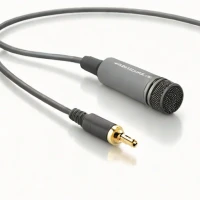
The Sennheiser ME 104 is a compact, wireless lavalier microphone designed for professional audio capture. Its notable feature is a hydraulically damped capsule which delivers remarkably low self-noise and precise rejection of unwanted sounds from the sides. This makes it ideal for broadcast applications, presentations, and on-location recording by presenters and other users needing high-quality, clean audio.
help Sennheiser ME 104 FAQ
What wireless transmitter packs are compatible with the Sennheiser ME 104 lavalier mic?
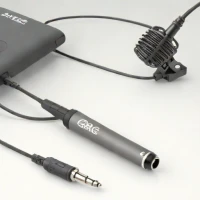
The Sennheiser ME 104 is a modular lavalier capsule that typically attaches to Sennheiser's MKE 2 clip or various wireless transmitter packs using a standard locking connector. It is frequently paired with Sennheiser's Evolution Wireless (EW) series, like the EW 112P G4. You must verify the connector type matches your specific transmitter before purchasing.
Is the Sennheiser ME 104 an omnidirectional or directional microphone?
Unlike standard omnidirectional lavs, the ME 104 is specifically engineered to be a directional (cardioid) lavalier. It features a hydraulically damped capsule that provides exceptionally accurate off-axis rejection, helping to eliminate background noise in diverse on-location recording scenarios. This makes it ideal for loud environments where you need to isolate the speaker's voice.
How do I reduce handling noise on the Sennheiser ME 104 during field recording?
To minimize handling and clothing rustle noise, you should utilize the included rubber shock-mount capsule enclosure and secure it firmly using specialized moleskin tape. Because of its miniature design, taping the mic directly to the talent's chest beneath a shirt will drastically reduce wind interference. The cardioid polar pattern also helps reject noises coming from the sides.
Does the Sennheiser ME 104 require phantom power to operate?
When used as part of an electret condenser system connected to a wireless transmitter, it draws the necessary plug-in power directly from the battery pack. If adapted for use with an XLR audio recorder or mixing board, it will require standard 48V phantom power. Ensure your recording device is properly configured to supply this power, or the microphone will produce no signal.
explore Explore More


Reviews & Comments
Write a Review
Be the first to review
Share your thoughts with the community and help others make better decisions.


