
description Teide fumaroles Overview
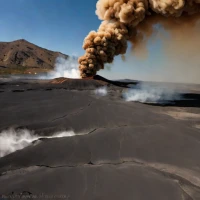
Teide fumaroles are gas-emitting vents on Mount Teide, a stratovolcano on the island of Tenerife in Spain's Canary Islands. At 3,715 meters above sea level, Teide is the highest point in Spanish territory. Minor seismic activity and fumarolic emissions occur periodically. The volcano and its surroundings form Teide National Park, a UNESCO World Heritage Site.
help Teide fumaroles FAQ
Where can visitors see fumaroles on Mount Teide?
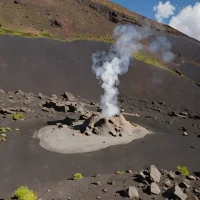
The most conspicuous vents occur around Teide's upper summit area, where warm ground and sulfurous gases escape through cracks. Mount Teide stands on Tenerife in Teide National Park and is Spain's highest peak.
Does steam from Teide's fumaroles mean the volcano is about to erupt?
No, persistent low-level fumarolic activity is evidence that heat and gases remain beneath the volcano, not a prediction of an imminent eruption. Scientists evaluate changes in gas chemistry, earthquakes and ground deformation together.
Why do Teide's fumaroles smell like rotten eggs?
The odor comes mainly from sulfur-bearing volcanic gases, particularly hydrogen sulfide. Yellow sulfur deposits can also form around some hot openings near the summit.
Do you need a permit to reach the Teide summit fumaroles?
Access to the final summit trail from the upper cable-car area is controlled and normally requires a permit. Conditions and closures can change because of weather or volcanic monitoring, so visitors should check Teide National Park's current rules.
explore Explore More
Similar to Teide fumaroles
compare_arrows Compare: Islote de Hilario geothermal... See all arrow_forward

Reviews & Comments
Write a Review
Be the first to review
Share your thoughts with the community and help others make better decisions.


