
description White Chanterelle Overview
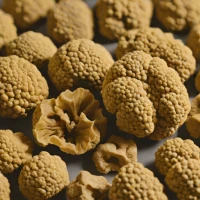
The White Chanterelle (Cantharellus subalbidus) is an edible fungus native to the coniferous forests of western North America, particularly the Pacific Northwest. It is closely related to the golden chanterelle but is distinguished by its stark white to pale cream coloration and highly fragile consistency. Like other chanterelles, it features forked, ridge-like gills and a frilly, indenting cap edge. It is a choice edible mushroom popular among wild foragers and is typically found from late summer through the winter months.
help White Chanterelle FAQ
How can I distinguish a white chanterelle from a poisonous jack-o'-lantern mushroom?
Cantharellus subalbidus has blunt, forked ridges that run down the stem rather than the sharp, blade-like true gills of an Omphalotus jack-o'-lantern. Because a mistaken identification can cause serious illness, a local expert should confirm any wild mushroom before it is eaten.
Where do white chanterelles grow?
White chanterelles occur in western North America and form mycorrhizal relationships with trees rather than growing directly from dead wood. In the Pacific Northwest they are particularly associated with forests containing Douglas fir and western hemlock.
Why does a white chanterelle turn yellow or orange when handled?
The initially white or cream surface can develop yellow-orange or brownish marks through bruising and age. That color change is a recognized characteristic of Cantharellus subalbidus, not necessarily a sign that the mushroom is spoiled.
Can white chanterelles be cultivated at home?
They are difficult to cultivate because they depend on a living partnership with tree roots. Most white chanterelles sold or cooked in western North America are therefore gathered from forests rather than grown like oyster mushrooms.
explore Explore More
Similar to White Chanterelle
See all arrow_forward


Reviews & Comments
Write a Review
Be the first to review
Share your thoughts with the community and help others make better decisions.


