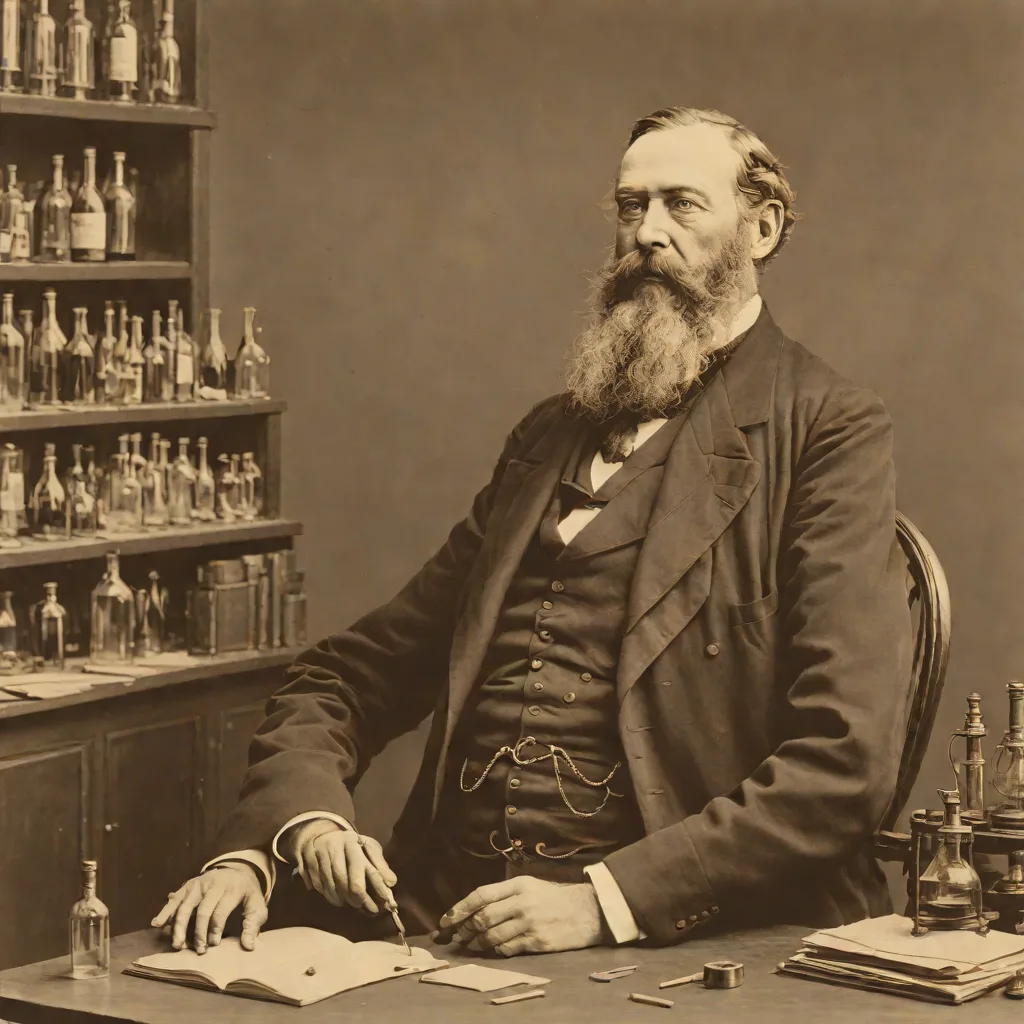
description Walter Haworth Overview
Walter Norman Haworth (1892-1940) was a British chemist whose research significantly advanced our understanding of carbohydrates. He notably elucidated the complex structures of glucose, cellulose, and vitamin C, establishing foundational concepts in organic chemistry and biochemistry. His work earned him the 1937 Nobel Prize. Haworth’s investigations are particularly relevant for biochemists, chemists studying sugars and related compounds, and researchers interested in early developments within these fields.
help Walter Haworth FAQ
Why did Walter Haworth win the Nobel Prize in Chemistry?
Sir Walter Norman Haworth shared the 1937 Nobel Prize in Chemistry with Paul Karrer. Haworth was recognized for investigations of carbohydrates and vitamin C.
What is a Haworth projection?
A Haworth projection is a way to draw cyclic sugar structures in a simplified three-dimensional perspective. Organic chemistry and biochemistry students still use it for molecules such as glucose.
What did Haworth do with vitamin C?
Haworth helped determine the structure of ascorbic acid, known as vitamin C, and reported its synthesis in the 1930s. The name ascorbic acid relates to its action against scurvy.
Where did Walter Haworth do his major academic work?
Haworth worked at institutions including the University of St Andrews and the University of Birmingham. He is strongly associated with Birmingham, where the Haworth Building commemorates him.
explore Explore More
Similar to Walter Haworth
See all arrow_forward


Reviews & Comments
Write a Review
Be the first to review
Share your thoughts with the community and help others make better decisions.