
description Dallol hydrothermal system Overview
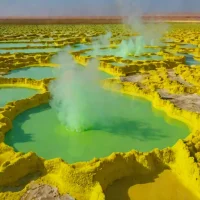
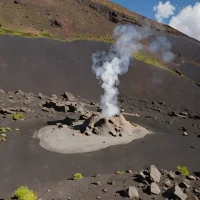
Dallol is a remarkable hydrothermal area within Ethiopia’s Danakil Depression. It features active fumaroles emitting acidic gases and brine pools with exceptionally low pH values—below zero in some areas. The system produces large quantities of salt and other minerals through intense geothermal activity. Scientists study Dallol to understand extreme environments, geological processes involving volcanic heat and water interaction, and the potential for unique microbial life adapted to these harsh conditions.
Researchers and specialists in volcanology, geochemistry, and microbiology utilize this site extensively.
help Dallol hydrothermal system FAQ
Why can the pools at Dallol have a pH below zero?
The brines contain exceptionally concentrated strong acids, salts, and iron compounds, so their hydrogen-ion activity can exceed the conventional pH 0 reference point. Researchers have measured some Dallol fluids at roughly pH -1.7.
What creates Dallol's bright yellow, green, and orange colors?
The colors come from sulfur, iron-rich salts, chlorides, and other minerals precipitating as hot brine cools and evaporates. They are chemical mineral deposits, not simply colorful microbial mats.
Can organisms actually live in the Dallol hydrothermal system?
Some studies have reported microbial activity in parts of the wider Dallol region, but the most acidic, hottest, and saltiest pools may be sterile. Conditions vary sharply between nearby springs, so findings from one Dallol pool cannot automatically be applied to another.
How hot are Dallol's hydrothermal fluids?
Water emerging from some chimneys can exceed 100 degrees Celsius because dissolved salts raise its boiling point. Dallol combines this heat with extreme salinity and acidity, making it a polyextreme environment.
explore Explore More


Reviews & Comments
Write a Review
Be the first to review
Share your thoughts with the community and help others make better decisions.


