
description Arènes d'Arles Overview
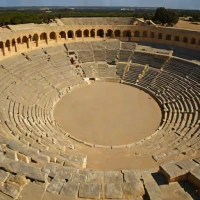
The Arènes d’Arles is a remarkably preserved Roman amphitheatre located in Arles, France. Constructed around 90 AD, it served as a venue for gladiatorial contests and public games within the Roman Empire. Its elliptical design and significant size make it notable as an example of early Roman engineering. Today, the arena continues to host bullfighting events and is accessible for historical study and tourism, primarily appealing to those interested in ancient history, architecture, and cultural heritage.
help Arènes d'Arles FAQ
When was the Arles Amphitheatre (Arènes d'Arles) built?
The Arènes d'Arles was constructed around 90 AD during the height of the Roman Empire. It was designed to seat over 20,000 spectators for gladiatorial contests and chariot races. Today, it stands as one of the best-preserved Roman amphitheaters in the world and a prime example of Roman engineering in Gaul.
What events are held at the Arènes d'Arles today?
The ancient arena is still actively used to host public spectacles, including traditional Provençal bullfights (course camarguaise) and Spanish-style corridas. It also serves as a major outdoor concert venue for international music acts during the summer. Its modern seating capacity is reduced to around 11,000 for safety and preservation.
Is the Arènes d'Arles a UNESCO World Heritage site?
Yes, the Arènes d'Arles is part of the 'Roman and Romanesque Monuments of Arles' UNESCO World Heritage Site. It received this prestigious designation in 1981 due to its outstanding historical and architectural significance. The site highlights the continuous transition from Roman architecture to medieval Romanesque art.
How big is the Arles Roman amphitheatre?
The Arènes d'Arles is a massive oval structure measuring 136 meters in length and 107 meters in width. It features a complex system of internal corridors and a two-tiered facade adorned with 60 arches. The architecture was heavily inspired by the Colosseum in Rome but adapted to fit the local Provençal landscape.
explore Explore More



Reviews & Comments
Write a Review
Be the first to review
Share your thoughts with the community and help others make better decisions.


