
description cluster state Overview
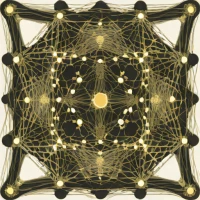
A cluster state represents a complex entanglement pattern involving multiple qubits arranged in a network. This configuration is notable because it allows for measurement-based quantum computations. The state's graph structure dictates how measurements influence subsequent qubit values. It’s primarily utilized by researchers and developers exploring algorithms leveraging entangled states, particularly those focused on distributed quantum computing and graph processing.
help cluster state FAQ
What is a cluster state in quantum computing?
A cluster state is a highly entangled multiparticle quantum state that serves as the foundational resource for measurement-based quantum computation. In this state, the quantum information is represented by the entanglement between neighboring qubits on a graph.
How are cluster states actually created in a laboratory?
Cluster states are typically generated by preparing a lattice of qubits in a uniform superposition and then applying controlled phase gates between neighboring qubits. In optical systems, scientists often use single photons and specialized beam splitters to create these complex entangled networks.
What is measurement-based quantum computation?
Also known as one-way quantum computation, this model performs calculations by taking single-qubit measurements on a pre-prepared cluster state. Unlike the standard circuit model, the computation is driven entirely by the sequence of these measurements.
Who developed the theory of computing with cluster states?
The concept of measurement-based quantum computing using cluster states was proposed by researchers Robert Raussendorf and Hans Briegel in the early 2000s. Their model provided an alternative to the standard gate-based quantum computing approach.
explore Explore More
Similar to cluster state
compare_arrows Compare: measurement-based quantum co... See all arrow_forward


Reviews & Comments
Write a Review
Be the first to review
Share your thoughts with the community and help others make better decisions.


