
description E91 protocol Overview
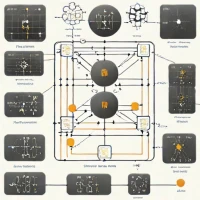
The E91 protocol is a foundational experiment in quantum mechanics utilizing three entangled photons. Developed by Artur Ekert in 1991, it rigorously tests Bell's inequalities through measurements performed in different orientations. This work demonstrates the violation of local realism, confirming that quantum correlations are fundamentally stronger than any possible classical explanation. The protocol is valuable for researchers exploring quantum entanglement and its implications for cryptography and secure communication, particularly those investigating quantum key distribution.
help E91 protocol FAQ
Who proposed the E91 protocol?
The E91 protocol was proposed by the Polish-British physicist Artur Ekert in 1991. He introduced it as a new method for quantum cryptography based entirely on quantum entanglement.
How does the E91 protocol verify secure communication?
The protocol uses Bell's theorem to check for eavesdroppers by measuring entangled particles in multiple bases. If the Bell inequality is satisfied rather than violated, the users know the communication channel has been compromised.
What specific particles are used in the E91 protocol?
The protocol typically describes the use of entangled photons to securely distribute cryptographic keys between two parties. These quantum correlations mathematically exceed the classical limits of standard physics.
How does E91 differ from the BB84 quantum protocol?
While BB84 relies on the sender transmitting individual polarized photons, E91 relies on both parties measuring pairs of entangled photons. This entanglement-based approach provides a physical mechanism for verifying true randomness.
explore Explore More



Reviews & Comments
Write a Review
Be the first to review
Share your thoughts with the community and help others make better decisions.


