
description Cocoon Nebula Overview
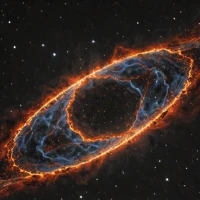
The Cocoon Nebula, formally designated IC 5146, is an emission and reflection nebula located within the Cygnus constellation. It’s notable for its distinctive bubble-like structure formed by light reflecting off dust clouds. Barnard 168, a dark lane, is closely associated with this region. Astronomers and amateur observers studying star formation regions and galactic structures find it particularly interesting.
help Cocoon Nebula FAQ
What Caldwell catalog number is the Cocoon Nebula?
The Cocoon Nebula is Caldwell 19 (C19) in Sir Patrick Moore's Caldwell catalog, which was compiled as a complement to the Messier list for Northern and Southern hemisphere observers. It also carries the designation IC 5146 in the Index Catalogue.
How do I find the Cocoon Nebula in the sky?
IC 5146 is located in the constellation Cygnus, near the star Pi Cygni, at the eastern end of the dark nebula Barnard 168. Star-hopping along the dark dust trail of Barnard 168 from Pi Cygni is the most common method amateur astronomers use to locate it.
Is the Cocoon Nebula easy to see visually?
The Cocoon Nebula is quite faint and difficult to observe visually; the trailing dark nebula Barnard 168 is often easier to detect than the nebula itself. A moderate to large telescope under very dark skies is typically needed, and narrowband filters can help bring out the faint reddish emission glow.
What makes the Cocoon Nebula interesting for astrophotography?
IC 5146 combines emission, reflection, and absorption features in a single compact field—red hydrogen-alpha glow, blue reflected starlight, and the dark dust lane of Barnard 168. This mix of components makes it a popular long-exposure target, though it requires significant total integration time to capture detail.
explore Explore More
Similar to Cocoon Nebula
compare_arrows Compare: North America Nebula (NGC 70... See all arrow_forward


Reviews & Comments
Write a Review
Be the first to review
Share your thoughts with the community and help others make better decisions.


