
description Copahue fumaroles Overview
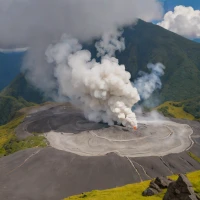
The Copahue fumaroles are highly active volcanic gas vents located at the summit of the Copahue stratovolcano, which straddles the border between Argentina and Chile. These vents continuously release sulfur-rich gases and steam, heavily influencing the geochemistry of the surrounding environment. They feed into a highly acidic crater lake situated within the volcano's main crater. During eruptive events, the heat and gases from these fumaroles can cause the acidic lake to evaporate or disappear completely.
help Copahue fumaroles FAQ
Where are the Copahue fumaroles located?
They are active gas vents in and around the summit crater of Copahue, a stratovolcano on the Argentina-Chile border. The volcano lies within the Caviahue-Copahue volcanic complex in Argentina's Neuquén region and Chile's Biobío area.
What gases come from the Copahue fumaroles?
Studies of Copahue report volcanic gases including sulfur dioxide, hydrogen sulfide, hydrochloric acid, and hydrogen fluoride. These gases interact with water in the crater system and can produce highly acidic hydrothermal fluids.
Why are Copahue's fumaroles important to scientists?
Copahue has an acidic summit crater lake about 300 meters wide and persistent fumarolic activity, making it a useful site for monitoring volcanic and hydrothermal change. Gas chemistry also helps researchers distinguish magmatic contributions from shallower geothermal processes.
Are the Copahue fumaroles connected to the volcano's hot springs?
Yes, the fumaroles and hot springs are surface expressions of the same broader hydrothermal system. The nearby Copahue and Caviahue geothermal areas are known for steam vents, acidic waters, bubbling pools, and sulfur-rich deposits.
explore Explore More
Similar to Copahue fumaroles
compare_arrows Compare: Rincón de la Vieja fumaroles See all arrow_forward


Reviews & Comments
Write a Review
Be the first to review
Share your thoughts with the community and help others make better decisions.


