
description Golden King Crab Overview
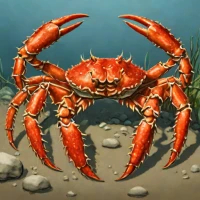
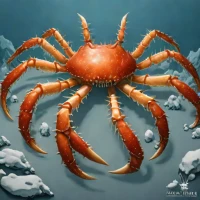
The golden king crab, Lithodes aequispinus, is a deep-water crustacean of the northern Pacific Ocean and a commercially harvested seafood species. It occurs around Alaska, including the Aleutian Islands, and is identified by a golden-orange to reddish shell covered with spines. It is generally smaller than the red king crab and lives on deep, rocky seafloors, where it feeds on a range of bottom-dwelling organisms.
help Golden King Crab FAQ
Where is the golden king crab harvested?
The golden king crab, scientifically known as *Lithodes aequispinus*, is primarily harvested in the deep waters of the northern Pacific Ocean. Significant commercial fisheries operate around Alaska, particularly near the Aleutian Islands. These crustaceans thrive at extreme depths, often dwelling on underwater mountain slopes and rocky terrain.
How does golden king crab taste compared to red king crab?
Golden king crab meat is known for its sweet, mild flavor, though it is slightly less rich than the highly prized red king crab. Its shell is covered in sharp spines, and the meat often has a slightly golden or orange hue. Because they are smaller and yield less meat, they are generally more affordable than red or blue king crabs.
What is the size of a golden king crab?
Golden king crabs are the smallest of the commercial king crab species in Alaska, typically weighing between 5 to 8 pounds. Despite their smaller size compared to red king crabs, their leg span can still reach impressive lengths. They are easily identified by their golden-orange to reddish shells covered in prominent, spiky protrusions.
When is the golden king crab fishing season?
The commercial fishing season for golden king crab varies depending on the specific regulatory area, but it generally takes place during the late summer and fall. Unlike some other crab fisheries that open in October, golden king crab harvests are carefully managed by the Alaska Department of Fish and Game. Quotas and exact dates are set annually to ensure sustainable fishing practices.
explore Explore More


Reviews & Comments
Write a Review
Be the first to review
Share your thoughts with the community and help others make better decisions.


