
description Gran Cratere fumaroles (Vulcano) Overview
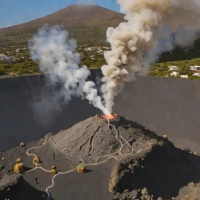
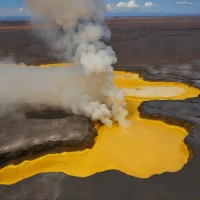
The Gran Cratere on Vulcano Island, located in Italy's Aeolian archipelago, is a prominent volcanic depression containing highly active fumaroles. These vents continuously release emissions of water vapor, carbon dioxide, sulfur dioxide, and hydrogen sulfide, resulting in the formation of distinct yellow sulfur crystal deposits around the crater rim. The area is closely monitored by volcanologists due to the toxic nature of the gases and the island's ongoing geothermal activity.
help Gran Cratere fumaroles (Vulcano) FAQ
Where is the Gran Cratere located, and how long does it take to hike?
The Gran Cratere is situated on the island of Vulcano in the Aeolian Islands, Italy, and the hike to the rim takes approximately 45 to 60 minutes from the base of the volcano. Visitors often start the trail from the Porto di Levante, navigating a steep path of volcanic ash.
What causes the yellow deposits seen around the fumaroles?
The vibrant yellow crusts are pure sulfur crystals that precipitate directly from the volcanic gases as they cool upon hitting the atmosphere. These fumaroles continuously emit steam, hydrogen sulfide, and sulfur dioxide, which accounts for the distinct rotten egg smell on the island.
Is it safe to visit the Gran Cratere fumaroles given the toxic gases?
While the volcano is monitored by the National Institute of Geophysics and Volcanology (INGV), visitors must avoid breathing the concentrated gases, especially those with respiratory issues like asthma. Strong winds or sudden changes in degassing can make the summit highly toxic, prompting local authorities to temporarily close the trails.
What was the last major eruption of Vulcano's Gran Cratere?
Vulcano's last major eruption occurred between 1888 and 1890, which explosively destroyed buildings on the island and gave us the modern scientific term "Vulcanian eruption." Currently, the volcano is in a state of solfataric activity, marked only by passive degassing.
explore Explore More
Similar to Gran Cratere fumaroles (Vulcano)
compare_arrows Compare: Solfatara di Pozzuoli fumaro... See all arrow_forward

Reviews & Comments
Write a Review
Be the first to review
Share your thoughts with the community and help others make better decisions.


