
description Great Meteor Tablemount Overview
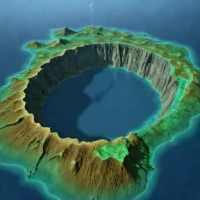
Great Meteor Tablemount is a large, flat-topped volcanic seamount in the northeast Atlantic Ocean. As a guyot, it has a broad summit beneath the sea, a form associated with erosion near sea level followed by submergence. It is a substantial Atlantic seafloor feature, and its shape preserves clues to a history that differs from the pointed profile of a volcanic mountain that has remained fully underwater. The German research vessel Meteor discovered the tablemount in 1938.
Its volcanic rocks and summit sediments provide material for studying oceanic volcanism, subsidence and plate tectonics. Geologists and marine researchers use such evidence to reconstruct how the feature formed and how its surroundings changed. The age of the oceanic crust beneath it should not be treated as the age of the volcano itself, an important distinction when interpreting its geological history.
help Great Meteor Tablemount FAQ
Where is the Great Meteor Tablemount located?
The Great Meteor Tablemount is a massive guyot (a flat-topped submarine volcano) located on the floor of the North Atlantic Ocean. It is situated south of the Azores islands. This geographic feature was extensively mapped and named by German researchers.
What makes the Great Meteor Tablemount unique?
The Great Meteor Tablemount is distinguished as the largest submarine volcano in the Atlantic Ocean. Over millions of years, its peak was eroded by wave action as the ocean floor subsided, creating its characteristic flat top. This makes it one of the most prominent geological features on the Atlantic seabed.
How was the Great Meteor Tablemount formed?
Like other guyots, the Great Meteor Tablemount was originally an active volcano that formed over a hotspot on the ocean floor. As the tectonic plate moved, the volcano was carried away from the magma source and eventually went extinct. Its top was eroded flat by waves before it sank beneath the sea surface.
Who discovered the Great Meteor Tablemount?
The massive submarine volcano was notably researched and named by German oceanographers, particularly the crew of the research vessel *Meteor*. The vessel conducted extensive surveys of the Atlantic Ocean floor in the 1920s. Their work helped confirm the massive scale of the underwater feature.
explore Explore More


Reviews & Comments
Write a Review
Be the first to review
Share your thoughts with the community and help others make better decisions.


