
description Green Sahara Overview
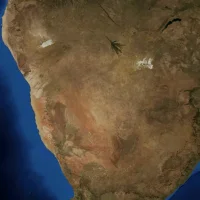
The Green Sahara refers to a period during the Holocene epoch when vast grasslands, lakes, and rivers flourished across what is now the central Sahara region of Africa. This expansion began approximately 14,600 years ago and continued for nearly 5,500 years, fundamentally altering the landscape. The phenomenon is significant for understanding past climate shifts and their impact on African ecosystems. Paleoclimatologists and researchers studying ancient environments utilize this information to investigate long-term environmental changes and assess their potential implications for modern climate patterns.
insights Why this score
Green Sahara ranks #72 of 422 in the Savanna ranking, behind Almost Heaven Auburn 2-3 Person Indoor Sauna, ahead of Almost Heaven Watoga 2-4 Person Barrel Sauna.
help Green Sahara FAQ
What caused the Sahara to become green during the Holocene?
Changes in Earth's orbit strengthened the African monsoon, carrying more summer rain into what is now the Sahara. The wetter climate supported grasslands, rivers, and large lakes across northern Africa.
When did the Green Sahara period begin and end?
The African Humid Period began roughly 14,600 years ago and persisted for several millennia. Conditions became substantially drier around 5,000 years ago, although the transition varied by region.
Did people live in the Green Sahara?
Yes. Archaeological sites and rock art show that hunter-gatherers, fishers, and later pastoral communities occupied the region when water and grazing land were available.
What animals lived in the Green Sahara?
The landscape supported animals associated with wetter Africa, including crocodiles, hippopotamuses, fish, and grazing mammals. Rock art at sites such as Tassili n'Ajjer also depicts cattle, giraffes, and other large animals.
explore Explore More
Similar to Green Sahara
See all arrow_forward


Reviews & Comments
Write a Review
Be the first to review
Share your thoughts with the community and help others make better decisions.


