
description Jetavanaramaya Overview
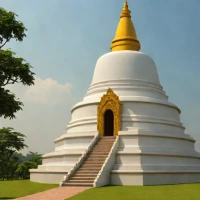
The Jetavanaramaya is an ancient Sinhalese stupa located in Anuradhapura, Sri Lanka. Constructed during the 3rd century CE by King Mahasena, it remains the largest dagoba—or brick stupa—globally. Its impressive scale and historical significance make it a notable landmark for scholars studying early Buddhist architecture and a site of pilgrimage for Buddhists.
help Jetavanaramaya FAQ
Which king built the Jetavanaramaya stupa in Anuradhapura, and during what period?
The Jetavanaramaya was constructed during the reign of King Mahasena of the Anuradhapura Kingdom in the 3rd century CE. Mahasena, who ruled from approximately 277 to 304 CE, was a controversial monarch known for his break with traditional Mahavihara Buddhist monastic order and his patronage of the Jetavana monastery.
How many bricks were used to construct the Jetavanaramaya, and is it the largest brick structure in the world?
The stupa is estimated to contain approximately 93 million baked bricks, making it one of the largest brick structures ever built by an ancient civilization. At its original height of roughly 122 meters, it was among the tallest structures in the ancient world, comparable in volume to some of the Egyptian pyramids.
What Buddhist relics are traditionally believed to be enshrined inside the Jetavanaramaya?
According to Sinhalese chronicles, the stupa enshrines a sash or belt relic tied by the Buddha, along with other sacred objects deposited during its consecration. These relics made Jetavanaramaya a major pilgrimage destination for Buddhists across Sri Lanka and the broader ancient Buddhist world.
Can visitors explore the Jetavana monastery ruins surrounding the stupa in present-day Anuradhapura?
Yes, the Jetavana monastery complex surrounding the stupa is part of the Sacred City of Anuradhapura, a UNESCO World Heritage Site since 1982. Visitors can explore extensive ruins including monastic living quarters, image houses, stone bathing pools, and the remains of what was once one of the largest Buddhist monastic institutions in the ancient world.
explore Explore More



Reviews & Comments
Write a Review
Be the first to review
Share your thoughts with the community and help others make better decisions.


