
description Lomonosov Crater Overview
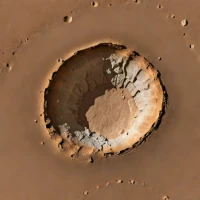
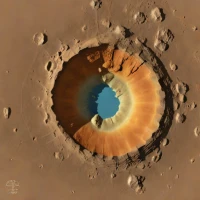
Lomonosov is a large impact crater on the surface of Mars, measuring approximately 120 kilometers in diameter. The crater is notable for its distinct ejecta blanket, which exhibits viscous flow features. These geological formations suggest that subsurface ice was melted and mobilized during the impact event. The crater is named after the Russian polymath Mikhail Lomonosov and provides planetary scientists with evidence of historical water ice on Mars.
help Lomonosov Crater FAQ
Where is Lomonosov Crater located?
Lomonosov Crater is located on Mars. It is a large impact structure with a diameter of approximately 120 kilometers.
Why does Lomonosov Crater have a distinctive ejecta blanket?
Its ejecta blanket shows viscous flow features, meaning the material moved in a fluid-like way after the impact. These features suggest that subsurface ice may have melted during the collision.
How wide is Lomonosov Crater?
The crater measures approximately 120 kilometers in diameter. Its large size and unusual ejecta make it an important Martian impact feature.
What might the Lomonosov impact reveal about water on Mars?
The viscous ejecta are consistent with an impact melting subsurface ice. This makes Lomonosov useful for studying past ground ice and climate conditions on Mars.
explore Explore More


Reviews & Comments
Write a Review
Be the first to review
Share your thoughts with the community and help others make better decisions.


