
description Red-breasted Goose Overview
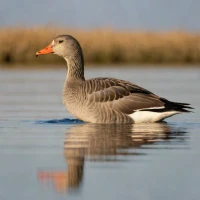
The red-breasted goose is a distinctive Arctic waterfowl species found across Europe and Asia. Its unique dark brown, white, and reddish-brown feathers make it easily identifiable. This goose is notable due to its endangered status and limited range. It’s primarily studied by ornithologists and conservationists focused on Anseriformes populations and the preservation of threatened bird species.
help Red-breasted Goose FAQ
What does the Red-breasted Goose look like?
The red-breasted goose is a distinctive Arctic waterfowl species easily identifiable by its unique dark brown, white, and reddish-brown feathers. The contrasting blocks of color create a striking pattern, particularly on the bird's face and flanks. This distinctive plumage makes it a favorite among ornithologists studying waterfowl across Europe and Asia.
Where does the Red-breasted Goose migrate?
The red-breasted goose breeds primarily in the Arctic tundra of the Russian Arctic before migrating south for the winter. During its migration across Europe and Asia, large flocks often winter in wetland regions around the Black Sea, particularly in Bulgaria and Romania. These specific wintering grounds are heavily monitored by researchers studying this endangered species.
Why is the Red-breasted Goose endangered?
The red-breasted goose is notable due to its endangered status, driven primarily by habitat loss and illegal hunting along its limited migration routes. Changes in agricultural practices in their wintering grounds around the Black Sea have drastically reduced the availability of suitable foraging areas. Conservationists are actively working to mitigate these threats to stabilize the declining global population.
What is the relationship between the Red-breasted Goose and birds of prey?
The red-breasted goose has a unique nesting behavior where it frequently establishes its nesting sites near the nests of birds of prey, such as the Peregrine Falcon. This instinctual behavior serves as a defense mechanism, as the aggressive falcons protect their own territory from predators like the Arctic fox. This fascinating ecological adaptation helps shield the vulnerable goslings from danger.
explore Explore More



Reviews & Comments
Write a Review
Be the first to review
Share your thoughts with the community and help others make better decisions.


