
description Rendang Overview
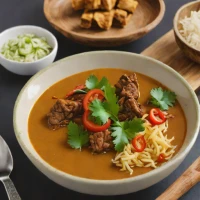
Rooted in the Minangkabau cooking traditions of Indonesia, rendang is also widely prepared in Malaysia and elsewhere in Southeast Asia. Beef is slowly cooked in coconut milk with an aromatic spice mixture that commonly includes lemongrass, ginger and chilies. As cooking continues, moisture evaporates and the seasoning concentrates around the meat. A fully reduced rendang has a relatively dry coating rather than the plentiful liquid sauce found in many other curries.
The method matters as much as the ingredients. Extended cooking allows the meat to become tender while the coconut and spices develop a deeper, concentrated character. Rendang suits diners interested in slow-cooked beef dishes with strong seasoning and little loose sauce. Although often grouped with dry curries, it has a specific cultural identity rather than being a generic regional preparation.
Variations exist, but the patient reduction of coconut milk remains central to its familiar form.
help Rendang FAQ
What is Rendang and where does it originate?
Rendang is a rich, dry curry originating from the Minangkabau ethnic group in West Sumatra, Indonesia. It is created by slow-cooking beef in coconut milk and a complex paste of spices until the liquid completely evaporates.
Why does traditional Rendang take so long to cook?
The traditional preparation of Rendang involves simmering the meat for several hours until the coconut milk reduces into a deeply flavored, dry paste. This slow caramelization process is essential to tenderize the beef and naturally preserve the meat in a tropical climate.
What are the key spices used in authentic Indonesian Rendang?
Authentic Rendang relies on a fragrant mixture of ingredients including lemongrass, galangal, ginger, garlic, and chilies. Turmeric leaves are also a crucial addition that gives the dish its distinct aroma and earthy flavor.
Is Rendang considered a curry or a dry stew?
While often categorized as a dry curry, traditional Minangkabau rendang is neither a curry nor a stew, but a distinct dish class of its own. Unlike liquid curries, the sauce is entirely absorbed into the meat, creating a dry, textured coating.
explore Explore More


Reviews & Comments
Write a Review
Be the first to review
Share your thoughts with the community and help others make better decisions.


