
description Sarmatian Steppe Overview
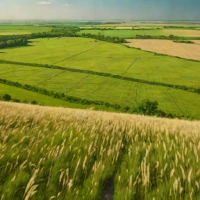
The Sarmatian Steppe is a historical geographic term for portions of the Pontic-Caspian grasslands north of the Black Sea and Caspian Sea. In classical antiquity, these open plains were occupied by Sarmatian peoples, Iranian-speaking pastoral nomads known for mounted warfare and long-distance movement across the Eurasian steppe. The term is useful in historical geography and archaeology rather than as the name of a precisely bounded modern region.
help Sarmatian Steppe FAQ
Where was the Sarmatian Steppe located?
Sarmatia referred broadly to parts of the Pontic-Caspian grasslands north of the Black Sea and Caspian Sea. It was a historical geographic label rather than a single modern country, and its boundaries changed across Greek and Roman sources.
Who were the Sarmatians?
The Sarmatians were a group of Iranian-speaking pastoral and equestrian peoples who became dominant on the Pontic Steppe from roughly the 5th century BCE to the 4th century CE. Groups associated with the wider Sarmatian world included the Roxolani, Iazyges, Siraces, and Alans.
How were the Sarmatians related to the Scythians and Alans?
The Sarmatians were part of the wider Iranian-speaking steppe world and were closely related to the earlier Scythians. The Alans later became a major Iranian group north of the Black and Caspian seas, as described by [Encyclopaedia Iranica](https://www.iranicaonline.org/articles/alans-an-ancient-iranian-tribe-of-the-northern-scythian-saka-sarmatian-massagete-group-known-to-classical-writers-from/).
Why are Sarmatians associated with mounted warfare?
The open grasslands favored mobile horse-based pastoralism and fast mounted attacks. Ancient sources also describe Sarmatian groups interacting with Greek settlements such as Pontic Olbia and later with Roman frontier societies.
explore Explore More


Reviews & Comments
Write a Review
Be the first to review
Share your thoughts with the community and help others make better decisions.


