
description Schistocerca piceifrons Overview
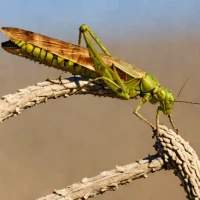
Schistocerca piceifrons, commonly called the Central American locust, is a grasshopper in the family Acrididae found in Mexico and Central America. Under suitable environmental and population conditions, it can shift from a relatively solitary phase into a gregarious phase that forms mobile bands and flying swarms. These outbreaks can damage maize, beans, sorghum, pasture, and other crops, making the species an important target of regional monitoring and control.
help Schistocerca piceifrons FAQ
What is the common name for the grasshopper species Schistocerca piceifrons?
Schistocerca piceifrons is commonly known as the Central American locust, reflecting its primary habitat range. It is a species found predominantly throughout Mexico and parts of Central America.
How does Schistocerca piceifrons change its behavior under certain conditions?
Under suitable environmental and population density conditions, this grasshopper can shift from a relatively harmless solitary phase into a destructive gregarious phase. This transformation is a classic example of locust phase polyphenism.
What kind of damage does the Central American locust cause?
When in its gregarious phase, Schistocerca piceifrons forms massive swarms that can travel great distances and devastate agricultural crops. These swarms pose a significant threat to food security and local economies in affected regions.
What biological family does Schistocerca piceifrons belong to?
Schistocerca piceifrons belongs to the family Acrididae, which encompasses the true grasshoppers and locusts. Members of this large insect family are characterized by their short horns and powerful hind legs adapted for jumping.
explore Explore More
Similar to Schistocerca piceifrons
compare_arrows Compare: Schistocerca cancellata See all arrow_forward


Reviews & Comments
Write a Review
Be the first to review
Share your thoughts with the community and help others make better decisions.


