
description St. George's Mushroom Overview
Calocybe gambosa, commonly known as St. George's Mushroom, is an edible fungus traditionally found in the grasslands and woodlands of Britain, Ireland, and parts of Europe. The species is named for its fruiting habit, as it characteristically emerges in the spring around April 23rd, which coincides with St. George's Day.
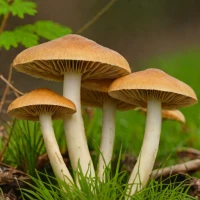
It features a white to pale cream cap and a distinct mealy, flour-like scent. The mushroom is a seasonal target for foragers due to its firm texture.
help St. George's Mushroom FAQ
Why is Calocybe gambosa called St. George's Mushroom?
The name refers to its traditional appearance around St. George's Day, April 23. In Britain and Ireland, the mushroom is associated with spring fruiting in grasslands and woodland margins.
Where does St. George's Mushroom grow?
Calocybe gambosa is traditionally found in grasslands, woodland edges, and parts of Europe. It often appears in grassy rings or groups during the spring fruiting season.
Is St. George's Mushroom edible?
Calocybe gambosa is widely regarded as an edible mushroom when correctly identified and thoroughly cooked. Because it can be confused with poisonous white mushrooms, eating a wild specimen requires expert identification.
What does St. George's Mushroom look like?
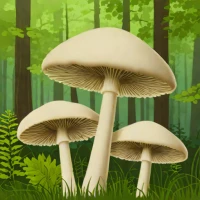
It usually has a pale cap, white to cream gills, and a stout stem, with a floury or mealy smell often noted in field guides. Its spring appearance around April 23 is one of the most useful clues, but it is not sufficient on its own for identification.
explore Explore More
Reviews & Comments
Write a Review
Be the first to review
Share your thoughts with the community and help others make better decisions.


