
description Stethophyma grossum Overview
Stethophyma grossum, commonly known as the large marsh grasshopper, is an insect in the family Acrididae distributed across damp habitats in Europe. It is restricted to wet environments, specifically favoring sphagnum bogs, peatlands, and wet heathlands where it relies on high moisture levels to survive. The species is visually distinguished by its striking coloration, often displaying bright blue or red markings on its hind legs. Because of the historical drainage and degradation of its specialized wetland habitats, it is currently recognized as a strict conservation priority species in the United Kingdom.
help Stethophyma grossum FAQ
How can I recognize a large marsh grasshopper?
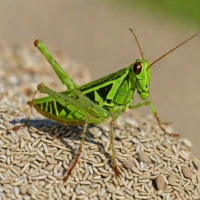
Stethophyma grossum is a comparatively large grasshopper colored from yellow-green to olive brown. A strong field mark is the vivid red underside of the hind femur, paired with yellow hind tibiae bearing dark spines.
Why is Stethophyma grossum restricted to wetlands?
Its eggs and nymphs depend on persistently damp conditions, so drainage can make a site unsuitable. It is associated with bogs, wet heath, fen, and tussocky vegetation such as purple moor-grass.
Is the large marsh grasshopper rare in Britain?
It has a localized British distribution and is listed as Near Threatened on the Great Britain Red List. Remaining populations are strongly associated with high-quality wetland habitat, including sites in the New Forest.
Does the large marsh grasshopper make a normal chirping song?
Its display is often described as a short clicking or popping sound rather than the prolonged chirp associated with many other grasshoppers. The sound is produced during courtship and can help locate adults in dense wetland vegetation.
explore Explore More



Reviews & Comments
Write a Review
Be the first to review
Share your thoughts with the community and help others make better decisions.


