
description Teeterboard Overview
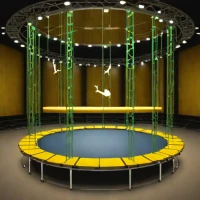
A teeterboard is a traditional circus apparatus consisting of a pivoting board with a raised edge. Acrobats use it to generate momentum for launching other performers into aerial maneuvers like somersaults and catches. It’s primarily utilized by groups involved in Chinese or Russian acrobatics, requiring skill and coordination from both the initiator and those being launched.
help Teeterboard FAQ
How does a circus teeterboard actually work?
A teeterboard works like a massive seesaw, where one acrobat stands on the lowered end while another jumps onto the raised end from a height. The kinetic energy propels the standing acrobat high into the air to perform aerial tricks.
What is the difference between a Korean plank and a traditional teeterboard?
The Korean plank is a newer variation where acrobats perform without hand tools, launching directly off a specialized wooden plank. The traditional teeterboard, often seen in Russian circuses, typically involves acrobats holding onto adagio straps for stability.
How high can acrobats be launched using a teeterboard?
Highly skilled teeterboard acrobats can be launched over 20 feet into the air. The board is heavily reinforced with layers of oak and spring steel to absorb the shock of the jumpers while maximizing the rebound.
What kind of training is required to use a teeterboard?
Performers require rigorous training in aerial awareness, core strength, and synchronized timing, often graduating from elite circus schools. A single mistimed jump by a jumper can result in the flyer being launched at a dangerous angle.
explore Explore More


Reviews & Comments
Write a Review
Be the first to review
Share your thoughts with the community and help others make better decisions.


