
description Francis William Aston Overview
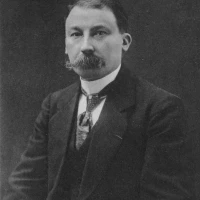
Francis William Aston developed innovative techniques in analytical chemistry centered around mass spectrometry. His work significantly advanced our understanding of elemental isotopes and their relative abundances. Aston’s precise measurements were crucial for scientific research and industrial applications, particularly in fields requiring accurate chemical analysis. He received the Nobel Prize recognizing his foundational contributions to this field.
help Francis William Aston FAQ
What did Francis William Aston invent to study elements?
Francis William Aston invented the first functional mass spectrograph in 1919. This groundbreaking instrument allowed him to measure the exact masses of different isotopes and separate them based on their mass-to-charge ratio.
Why was Francis Aston awarded the Nobel Prize?
He was awarded the 1922 Nobel Prize in Chemistry for his discovery of a large number of isotopes in non-radioactive elements. His mass spectrometry work provided definitive proof of the isotopic nature of matter.
What is the 'Whole Number Rule' formulated by Francis Aston?
Aston's Whole Number Rule states that all atomic masses are very close to whole numbers when measured against the oxygen-16 scale. This fundamental observation helped physicists understand nuclear binding energy and mass defect.
Did Francis William Aston work under another famous scientist?
Yes, early in his career, Aston worked as an assistant to J.J. Thomson at the Cavendish Laboratory in Cambridge. During this time, he investigated the properties of neon gas, which ultimately led him to invent the mass spectrograph.
explore Explore More
Similar to Francis William Aston
See all arrow_forward


Reviews & Comments
Write a Review
Be the first to review
Share your thoughts with the community and help others make better decisions.


