
description Argent and sable moth Overview
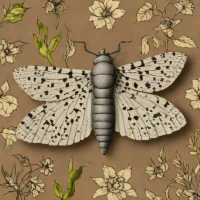
The argent and sable moth (*Rheumaptera hastata*) is a day-flying species of geometrid moth characterized by its contrasting black and white wing patterns. It is widely distributed across the northern hemisphere, with populations found throughout northern Europe, Asia, and North America. The larvae primarily feed on the leaves of deciduous trees and shrubs, particularly birch and willow. This diurnal behavior makes the species more conspicuous to observers than nocturnal moths, and it is frequently spotted in woodland habitats and open moorlands.
help Argent and sable moth FAQ
What does 'argent and sable' mean in the moth's name?
The name borrows from heraldry, where argent is silver-white and sable is black. It describes the moth's striking black-and-white patterned wings, which look almost like a checked banner when it flies by day.
Where can you find the argent and sable moth in the UK?
It occurs mainly in Scotland and parts of northern England, favoring birch woodland, moorland edges, and damp habitats. It is a listed conservation priority in the UK, where habitat change has made populations increasingly local.
What do argent and sable caterpillars feed on?
The larvae feed primarily on birch, particularly the young growth found on regenerating trees and moorland scrub. Finding suitable birch habitat is key to locating this day-flying species.
When is the argent and sable moth on the wing?
Adults typically fly in late spring and early summer, roughly May through July depending on location and elevation. Unlike most moths, they're active in daylight and can be disturbed from vegetation or seen nectaring on sunny days.
explore Explore More


Reviews & Comments
Write a Review
Be the first to review
Share your thoughts with the community and help others make better decisions.


