
description Bunhwangsa Pagoda Overview
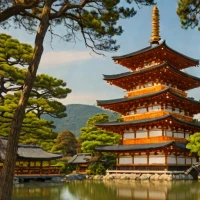
The Bunhwangsa Pagoda, located at the Bunhwangsa temple complex in Gyeongju, South Korea, is a historic stone monument constructed in 634 CE during the reign of Queen Seondeok. It is distinctively carved from andesite blocks that are shaped to resemble traditional clay bricks, a design known as Mojeonseoktap. Standing at what is believed to have been originally nine stories, it remains one of the oldest surviving pagodas from the Silla dynasty. The structure provides architectural historians with critical insights into early Korean Buddhist masonry.
help Bunhwangsa Pagoda FAQ
When was the Bunhwangsa Pagoda built?
The pagoda was constructed in 634 CE during the reign of Queen Seondeok of Silla. It is part of the Bunhwangsa temple complex in Gyeongju, South Korea.
Why does Bunhwangsa Pagoda look like it is made from bricks?
The monument is carved from andesite blocks shaped and arranged to imitate traditional brick construction. That technique gives the stone pagoda its unusual masonry appearance while preserving the durability of stone.
How many stories does Bunhwangsa Pagoda have today?
The surviving structure has three visible stories, although historians generally believe it originally rose higher, often described as a nine-story pagoda. Damage and rebuilding over the centuries altered the monument from its original form.
What is special about Bunhwangsa Pagoda compared with later Korean stone pagodas?
It is one of the earliest surviving stone pagodas in Korea and belongs to the Silla period, beginning in 634 CE. Its brick-like andesite construction makes it substantially different from the more standardized granite pagodas seen in later Korean Buddhist sites.
explore Explore More
Similar to Bunhwangsa Pagoda
compare_arrows Compare: Wild Goose Pagoda (Da Yan Ta... See all arrow_forward


Reviews & Comments
Write a Review
Be the first to review
Share your thoughts with the community and help others make better decisions.


