
description Burnished brass moth Overview
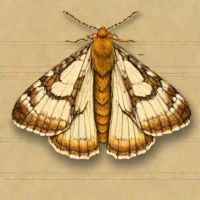
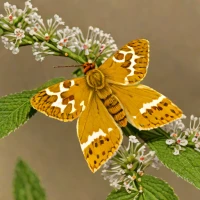
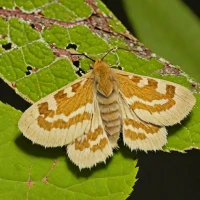
The burnished brass moth, Diachrysia chrysitis, is a noctuid moth found across much of Europe and temperate Asia. Its forewings bear reflective metallic patches that can appear golden, greenish, or brassy depending on the angle of light, while the hindwings are comparatively plain. The caterpillars feed on several herbaceous plants, including nettles, and adults are mainly active at night during the warmer months.
help Burnished brass moth FAQ
Why does the Burnished Brass moth have metallic gold wings?
The insect is famous for the prominent, iridescent, metallic gold or brass markings on its wings, which are created by microscopic structural scales rather than actual pigment. This structural coloration causes the wings to beautifully reflect light, looking like hammered metal.
What plants do Burnished Brass moth caterpillars feed on?
The caterpillars of this striking Eurasian noctuid insect are commonly found feeding on various species of nettles, dead-nettles, and mint plants. They roll the leaves of these plants around themselves using silk for protection while they eat.
When is the best time to see the Burnished brass moth in the wild?
Adults are typically on the wing from May through to September and often produce two distinct generations per year in warmer climates. Because they are noctuid (night-flying) insects, you are most likely to encounter them resting during the day or flying toward light traps at dusk.
Are there different variations of the Burnished Brass moth's wing pattern?
Yes, scientists have identified two distinct color forms of Diachrysia chrysitis, known as *chrysitis* and *juno*. The *juno* form features unbroken metallic bands across the wings, while the *chrysitis* form has a distinct break that separates the metallic patch.
explore Explore More
Reviews & Comments
Write a Review
Be the first to review
Share your thoughts with the community and help others make better decisions.


