
description Cromford Mill Overview
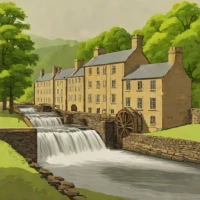
Cromford Mill represents a pivotal moment in industrial history. Constructed in 1771 by Richard Arkwright, it was the world’s first water-powered cotton spinning mill. This Derbyshire landmark demonstrates early factory production and is recognized as part of the Derwent Valley Mills UNESCO World Heritage Site. It's significant for textile historians, engineers, and those interested in the origins of modern manufacturing.
help Cromford Mill FAQ
How did Richard Arkwright's Cromford Mill revolutionize cotton spinning when it opened in 1771?
Cromford Mill, built by Richard Arkwright in 1771 in Derbyshire, was the world's first water-powered cotton spinning mill, housing multiple water frames under one roof for centralized mass production. This factory system, where workers operated mechanized equipment driven by water power rather than spinning yarn by hand at home, marked the birth of the modern industrial factory and transformed textile manufacturing.
What water source powered Cromford Mill's spinning machinery?
Cromford Mill was powered by water from Bonsall Brook and the Cromford Sough, a lead-mine drainage channel that provided a reliable year-round flow of water to drive the mill's water wheels. Arkwright chose the Cromford site specifically because this consistent water supply could keep his water frames running continuously, a critical advantage over seasonal streams.
When was Cromford Mill designated as part of the Derwent Valley Mills UNESCO World Heritage Site?
The Derwent Valley Mills, including Cromford Mill, were inscribed as a UNESCO World Heritage Site in 2001 in recognition of their pivotal role in the development of the factory system and the Industrial Revolution. The site includes a series of historic mill complexes along the River Derwent stretching from Cromford through Belper to Derby.
Can visitors tour the original 1771 Cromford Mill buildings today?
Yes, the Cromford Mill site is open to the public and operated by the Arkwright Society, which has undertaken extensive restoration of the surviving structures. Visitors can explore the first mill building, view exhibitions about Richard Arkwright and the Industrial Revolution, and take guided tours that explain the water-powered machinery and the factory community Arkwright built around the site.
explore Explore More


Reviews & Comments
Write a Review
Be the first to review
Share your thoughts with the community and help others make better decisions.


