
description Hummingbird hawk-moth Overview
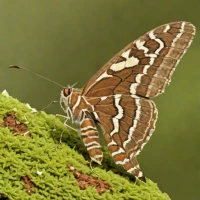
The hummingbird hawkmoth (Macroglossum stellatarum) is a European moth resembling a tiny hummingbird. It’s notable for its remarkable hovering flight, achieved by rapidly vibrating its wings to maintain stationary positions while feeding on nectar from flowers. This behavior makes it useful for pollination and provides a fascinating spectacle for nature enthusiasts, birdwatchers, and those interested in insect behavior.
help Hummingbird hawk-moth FAQ
How does the Hummingbird hawk-moth hover in mid-air?
The Hummingbird hawk-moth possesses incredibly rapid wingbeats, fluttering up to 80 times per second, which allows it to hover perfectly stationary in mid-air while feeding. This rapid, humming movement generates a low-pitched humming noise, making it sound and look incredibly similar to an actual hummingbird. It can also fly forwards, backwards, and sideways like a true hummingbird.
What does the Hummingbird hawk-moth eat?
Like the bird it physically mimics, this moth feeds exclusively on the sugary liquid nectar found inside flowering plants. It possesses a remarkably long, straw-like proboscis that it unrolls deep into tubular flowers to extract the nectar while remaining in flight. It is highly attracted to plants with strong, sweet fragrances, particularly blue, purple, or pink colors.
Where can you typically find Hummingbird hawk-moths in the wild?
This species is widely distributed across the warmer temperate and tropical regions of southern Europe, North Africa, and Asia. They are highly strong, migratory fliers, often traveling vast distances northward during the summer months to establish temporary breeding populations in places like the UK. They thrive in warm, sunny gardens, meadows, and woodland edges.
Is the Hummingbird hawk-moth active during the day or night?
Unlike the vast majority of moth species which are nocturnal, the Hummingbird hawk-moth is strictly diurnal and highly active during the bright daylight hours. This daytime activity pattern is absolutely crucial for visually locating brightly colored, nectar-rich flowers. They are most frequently observed flying rapidly from flower to flower in bright, warm sunshine.
explore Explore More

Reviews & Comments
Write a Review
Be the first to review
Share your thoughts with the community and help others make better decisions.


