
description Oleander hawk-moth Overview
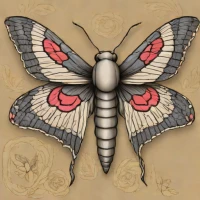
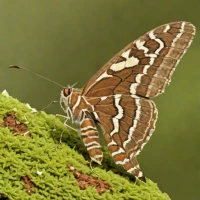
The Oleander hawk-moth (*Daphnis nerii*) is a large, migratory species of sphingid moth found across the Old World, including Africa, Asia, and parts of southern Europe. It is distinguished by its intricate camouflage, featuring complex patterns of green, pink, and purple that allow it to blend seamlessly into foliage. The moth's larvae are uniquely adapted to feed on highly toxic plants, such as oleander and periwinkle, making the species a frequent subject for lepidopterists studying plant-herbivore chemical tolerance.
help Oleander hawk-moth FAQ
How can an oleander hawk-moth caterpillar eat poisonous oleander?
Daphnis nerii is physiologically adapted to feed on Nerium oleander despite the plant's defensive cardiac glycosides. Its caterpillars also use periwinkle, grapevine, and other plants when suitable oleander is unavailable.
Does seeing an oleander hawk-moth in northern Europe mean it breeds there?
Not necessarily, because this powerful flier regularly migrates north from warmer parts of Africa, Asia, and southern Europe. Records in places such as Britain are generally uncommon migrant sightings rather than evidence of a stable resident population.
How large is an oleander hawk-moth?
An adult Daphnis nerii commonly has a wingspan around 9 to 11 centimeters. Its sweeping green, olive, cream, and pink pattern makes it very different from most other European hawk-moths.
What happens when an oleander hawk-moth caterpillar is ready to pupate?
The green caterpillar darkens and leaves its host plant to find a sheltered place near the ground. It forms a brown pupa among loose leaves or surface debris rather than spinning a conspicuous suspended cocoon.
explore Explore More


Reviews & Comments
Write a Review
Be the first to review
Share your thoughts with the community and help others make better decisions.


