
description Kanishka Stupa Overview
The Kanishka Stupa stood in present-day Peshawar, Pakistan representing a significant Kushan Empire monument. Constructed around the 2nd century CE by Emperor Kanishka, it served as a shrine for Buddhist relics. The stupa’s location and construction provide valuable insights into early Buddhist practices and the Kushan kingdom's influence. Archaeologists and historians study this site to understand ancient religious architecture and the region's cultural heritage.
help Kanishka Stupa FAQ
Where was the ancient Kanishka Stupa located?
The stupa was located in the ancient city of Purushapura, which is known today as Peshawar in modern-day Pakistan. It was built during the height of the Kushan Empire to serve as the center of Buddhist learning in the region.
What Buddhist relic was supposedly housed inside the Kanishka Stupa?
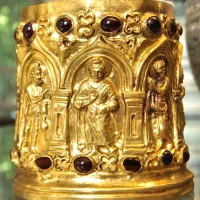
The stupa was built to house sacred relics of Gautama Buddha. The relic casket, which featured an image of the Buddha and Kanishka, was famously discovered by archaeologists during an excavation in 1909.
How tall did ancient historians claim the Kanishka Stupa was?
According to ancient Chinese pilgrims like Xuanzang, who visited the site in the 7th century, the stupa was incredibly massive. They claimed it was roughly 600 to 700 feet tall, making it one of the tallest structures in the ancient world.
Who commissioned the construction of the Kanishka Stupa?
The stupa was commissioned by Emperor Kanishka the Great in the 2nd century CE. He was a major patron of Mahayana Buddhism, and he built the monument to solidify his empire's status as a major religious hub.
explore Explore More


Reviews & Comments
Write a Review
Be the first to review
Share your thoughts with the community and help others make better decisions.


