
description Láscar fumaroles Overview
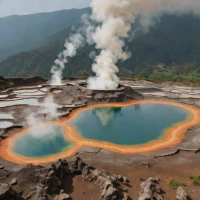
Láscar fumaroles are gas vents on Láscar, the most active volcano in northern Chile's Andes, located at approximately 5,592 meters elevation. The volcano produced a significant explosive eruption in April 1993 and continues to emit sulfur dioxide plumes. Láscar's persistent degassing is monitored by Chilean geological agencies due to its activity level.
help Láscar fumaroles FAQ
Why does Láscar produce a persistent sulfur dioxide plume?
Láscar has an active magmatic and hydrothermal system that continuously releases sulfur-rich gas through its summit craters. This persistent degassing is one reason it is regarded as northern Chile's most active volcano.
What happened to Láscar's fumaroles during the April 1993 eruption?
The fumarolic system escalated into a major explosive eruption in April 1993, producing high ash columns and pyroclastic flows. Ash from the event traveled far across Argentina.
Which Láscar crater contains the active fumaroles?
Activity is concentrated in the volcano's summit crater complex, particularly the central active crater. The exact distribution of vents changes as collapses, deposits and new fractures reshape the crater floor.
Why do scientists measure sulfur dioxide at Láscar?
Changes in sulfur dioxide output can reveal shifts in magma degassing beneath the volcano. Scientists combine those measurements with seismicity, thermal observations and visual plume monitoring rather than treating gas levels as a standalone forecast.
explore Explore More



Reviews & Comments
Write a Review
Be the first to review
Share your thoughts with the community and help others make better decisions.


