
description Rode Procaster Overview
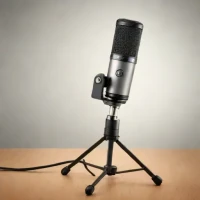
The Rode Procaster is a broadcast-quality dynamic microphone known for its exceptional off-axis rejection and warm, full sound. While not as compact as some other options, its robust build and professional performance make it a great choice for serious podcasters and voice-over artists. Its portability is enhanced by its XLR connectivity and durable construction. A step up in quality for those seeking a professional sound.
help Rode Procaster FAQ
Do I need an audio interface or preamp to use the Rode Procaster?
Yes, because the Procaster is a dynamic microphone with an XLR output, it requires an audio interface or mixing console to amplify the signal to a usable level. Its output gain is relatively low compared to condenser mics, so a clean preamp with plenty of gain (like a Focusrite Scarlett or a Cloudlifter) is highly recommended to avoid hiss.
Is the Rode Procaster good for streaming in an untreated room?
Yes, the Procaster is exceptional for untreated rooms because of its tight polar pattern and excellent off-axis rejection. It is designed to focus entirely on the sound directly in front of it, ignoring background noise like keyboard clicks or fan hum. This is why it is heavily favored by podcasters and Twitch streamers.
How does the Procaster compare to the Shure SM7B?
Both are broadcast-quality dynamic microphones famous in the podcasting world, but the Rode Procaster is significantly cheaper, usually retailing around $230 compared to the SM7B's $400 price tag. While the SM7B has a wider frequency response and a more iconic form factor, the Procaster actually requires slightly less preamp gain to drive effectively.
What mounting hardware is included with the Rode Procaster?
The Procaster comes standard with a sturdy, professional shock mount (the RM2) that attaches to a standard microphone stand. However, most podcasters prefer to remove the included mount and use a third-party boom arm, like the Rode PSA1, to position the heavy microphone closer to their mouths for optimal vocal proximity effect.
explore Explore More
Similar to Rode Procaster
compare_arrows Compare: Rode NT-USB+ (Broadcast Bund... See all arrow_forward


Reviews & Comments
Write a Review
Be the first to review
Share your thoughts with the community and help others make better decisions.


