
description Umayyad Mosque (Damascus) Overview
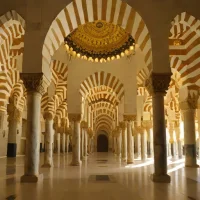
The Umayyad Mosque in Damascus is an 8th-century Islamic monument situated on the remains of a previous Byzantine church. Constructed during the rule of Caliph al-Walid I between 705 and 715 CE, it represents a significant early example of mosque architecture. It remains a vital place of worship for Shia Muslim communities and is a key historical site attracting researchers, historians, and visitors interested in Islamic history and Syrian heritage.
help Umayyad Mosque (Damascus) FAQ
What was the Umayyad Mosque before it was a mosque?
The site of the Umayyad Mosque has been used for worship for thousands of years. It originally housed a massive Aramean temple dedicated to the god Hadad. Later, it became a Roman temple of Jupiter, and subsequently, a Christian basilica dedicated to John the Baptist.
How big is the Umayyad Mosque?
The Great Mosque of Damascus is massive, covering an enormous rectangular courtyard that measures about 157 by 100 meters. The sprawling complex can hold thousands of worshippers inside its expansive prayer hall. Its sheer scale makes it one of the largest and oldest mosques in the world.
Where is the Umayyad Mosque located?
The mosque is located in the heart of the old walled city of Damascus, Syria. It sits along the famous 'Street Called Straight' (Via Recta) mentioned in the Bible. Damascus itself is one of the oldest continuously inhabited cities in the world.
Who built the Great Mosque of Damascus?
The current mosque structure was commissioned by the Umayyad Caliph al-Walid I between 705 and 715 CE. He wanted to build a grand monument that would solidify Damascus as the capital of the Islamic world. The construction took ten years and utilized skilled artisans from across the Byzantine and Persian empires.
explore Explore More
Similar to Umayyad Mosque (Damascus)
compare_arrows Compare: Imam Mosque (Isfahan) See all arrow_forward


Reviews & Comments
Write a Review
Be the first to review
Share your thoughts with the community and help others make better decisions.


