
description Waeringoscorpius hefteri Overview
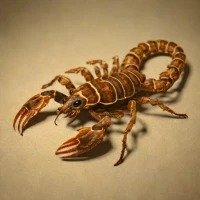
Waeringoscorpius hefteri is an extinct species of scorpion that lived during the Silurian period, approximately 443-419 million years ago. Fossil specimens have been discovered in the Bertie Group of New York state, preserving details of these early arachnids. The genus was named by paleontologist Erik Kjellesvig-Waering, who made significant contributions to the study of fossil scorpions. As one of the earliest known scorpion species, Waeringoscorpius hefteri provides scientists with important evidence about the evolutionary transition of scorpions from aquatic to terrestrial environments, showing features that suggest it may have been amphibious rather than fully land-dwelling.
help Waeringoscorpius hefteri FAQ
When did Waeringoscorpius hefteri live?
Waeringoscorpius hefteri lived during the Silurian period, approximately 443 to 419 million years ago. This places it among the earliest known scorpions, living at a time when the first terrestrial arthropods were beginning to colonize land.
Where have fossils of Waeringoscorpius hefteri been found?
Fossil specimens of Waeringoscorpius hefteri have been discovered in the Bertie Group, a sequence of Silurian-age sedimentary rocks in New York State. The Bertie Group is well known among paleontologists for its exceptional preservation of early eurypterids (sea scorpions) and related arthropods.
Was Waeringoscorpius hefteri aquatic or terrestrial?
There has been scientific debate about whether early Silurian scorpions like Waeringoscorpius were fully terrestrial or still partially aquatic. Their morphology shows features that could support both lifestyles, and the depositional environment of the Bertie Group suggests these animals may have lived in or near shallow marine to brackish waters.
Who is Waeringoscorpius named after?
The genus Waeringoscorpius was named in honor of Erik N. Kjellesvig-Waering, a prominent paleontologist who studied fossil arthropods, particularly eurypterids and scorpions, in the mid-20th century. His work significantly advanced the understanding of Silurian arthropod diversity.
explore Explore More
Similar to Waeringoscorpius hefteri
compare_arrows Compare: Gondwanascorpius emzantsiens... See all arrow_forward


Reviews & Comments
Write a Review
Be the first to review
Share your thoughts with the community and help others make better decisions.


