
description Yeti Crab Overview
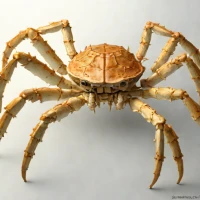
Pale coloring and dense, hair-like bristles distinguish Kiwa hirsuta, the deep-sea animal commonly called the yeti crab. It lives near hydrothermal vents in the southeastern Pacific Ocean and belongs to the family Kiwaidae, a group of anomuran crustaceans related to squat lobsters. Its conspicuously bristled claws carry colonies of bacteria, creating a close association between the animal and microbial life around the vents. These bacteria can use chemicals available in vent environments, where sunlight cannot support ordinary photosynthesis.
Their exact contribution to the diet of Kiwa hirsuta should not be treated as settled simply because bacterial feeding has been demonstrated in other yeti crab species. The animal is particularly relevant to marine biologists studying life in extreme environments and the relationships between deep-sea animals and microbes.
help Yeti Crab FAQ
Where was the first yeti crab discovered?
The first yeti crab, *Kiwa hirsuta*, was discovered in the South Pacific Ocean near Easter Island. It was found in 2005 by a team of scientists operating the research submarine Alvin at a depth of around 2,200 meters.
What is the purpose of the yeti crab's hairy claws?
The dense, hair-like setae on the yeti crab's claws host colonies of chemosynthetic bacteria. The crab is believed to wave its claws over hydrothermal vents to help these bacteria harvest chemicals from the water, which the crab then eats.
Are there other species besides Kiwa hirsuta?
Yes, scientists have since discovered additional species within the Kiwaidae family, including Kiwa puravida found near Costa Rica and Kiwa tyleri found in the Antarctic. Each species is adapted to the extreme conditions of its specific deep-sea vent environment.
What kind of environment does the yeti crab live in?
Yeti crabs thrive exclusively around deep-sea hydrothermal vents, where superheated, mineral-rich water bursts from the ocean floor. These extreme environments rely on chemosynthesis rather than sunlight to support their unique ecosystems.
explore Explore More



Reviews & Comments
Write a Review
Be the first to review
Share your thoughts with the community and help others make better decisions.


