
description Tityus serrulatus Overview
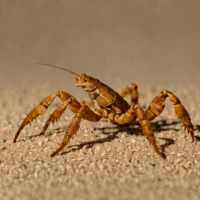
Tityus serrulatus is a South American scorpion belonging to the Buthidae family. It’s notable as one of the few scorpions exhibiting parthenogenesis, meaning it reproduces without fertilization. This species is recognized for its exceptionally potent venom, considered among the most dangerous in Brazil. Researchers and medical professionals studying venom composition and scorpion physiology find this species particularly relevant.
help Tityus serrulatus FAQ
How does *Tityus serrulatus* reproduce without a mate?
*Tityus serrulatus*, commonly known as the Brazilian yellow scorpion, reproduces via parthenogenesis, meaning females can produce viable offspring without male fertilization. This asexual reproduction results in genetically identical clones of the mother, allowing populations to explode rapidly under the right conditions. It is one of the very few scorpion species in the world known to exhibit this biological trait.
How dangerous is the venom of *Tityus serrulatus* to humans?
The venom of *Tityus serrulatus* is highly toxic and is considered one of the most potent scorpion venoms in South America, particularly dangerous to children. Stings can cause severe systemic symptoms, including cardiac arrhythmias, pulmonary edema, and potentially death if left untreated. Because of its high toxicity, an anti-venom was specifically developed in Brazil to counteract its effects.
Why is *Tityus serrulatus* commonly found in urban areas of Brazil?
This species has adapted exceptionally well to urban environments because it feeds on insects like cockroaches that thrive in human settlements. Furthermore, because they reproduce via parthenogenesis, a single pregnant female accidentally transported via cargo or logging can establish an entirely new local population. This adaptability has led to the species becoming a significant public health concern in major Brazilian cities like Belo Horizonte.
What does the name *serrulatus* refer to on the scorpion's body?
The specific epithet *serrulatus* translates to "serrated" or "notched," referring to the distinct, saw-like teeth found on the scorpion's pectines. The pectines are specialized, comb-like sensory organs located on the underside of the scorpion near its abdomen. These structures are used by the scorpion to detect textures and chemical cues on the ground surface.
explore Explore More



Reviews & Comments
Write a Review
Be the first to review
Share your thoughts with the community and help others make better decisions.


