
description Small magpie moth Overview
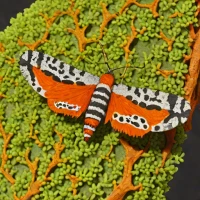
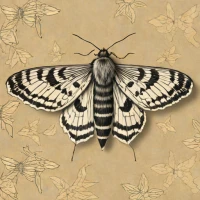
The small magpie, Anania hortulata, is a moth in the family Crambidae rather than a geometrid moth. It occurs widely across Europe and is readily identified by white wings marked with bold black patches and yellow coloring on parts of the body. Adults are often disturbed from vegetation during the day, while the larvae feed chiefly on common nettle, making the species familiar in gardens, hedgerows, and other nettle-rich habitats.
help Small magpie moth FAQ
How do I identify the small magpie moth, Anania hortulata?
The small magpie is Anania hortulata, a Crambidae moth rather than a geometrid. Its white wings have bold black patches and its yellowish body makes it distinctive, with a typical wingspan of about 24-28 mm. [UKMoths species account](https://www.ukmoths.org.uk/species/anania-hortulata)
What do small magpie moth caterpillars eat?
Common nettle, Urtica dioica, is the main food plant. Larvae may also use woundworts, mints, horehounds, and bindweeds, usually feeding from a rolled or spun leaf. [UKMoths food-plant details](https://www.ukmoths.org.uk/species/anania-hortulata)
When can I see a small magpie moth in Britain?
Adults are recorded mainly from May to July, with June and July the strongest flight months in UK records. The species is common in the southern half of Britain and becomes less common farther north. [UKMoths flight-period records](https://www.ukmoths.org.uk/species/anania-hortulata)
Will a small magpie moth damage my vegetable garden?
Its caterpillars mainly feed on common nettle and several wild plants, so a garden sighting does not usually indicate a crop-pest infestation. The adult moth is harmless to people and is a familiar garden species in Britain. [The Wildlife Trusts](https://www.wildlifetrusts.org/wildlife-explorer/invertebrates/moths/small-magpie)
explore Explore More

Reviews & Comments
Write a Review
Be the first to review
Share your thoughts with the community and help others make better decisions.


