
description Bhaja Stupa Overview
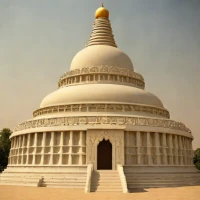
The Bhaja Stupa is an early Buddhist rock-cut monument located within the Bhaja Caves complex in Maharashtra, India, dating back to the 2nd century BCE. Situated inside a chaitya-griha, or prayer hall, it represents one of the earliest surviving examples of Indian rock-cut architecture from the Satavahana period. The structural stupa features a cylindrical base supporting a hemispherical dome, serving as a focal point for relic worship by early monastic communities.
help Bhaja Stupa FAQ
Where is the Bhaja Stupa located?
The Bhaja Stupa is an early Buddhist rock-cut monument located within the Bhaja Caves complex in Maharashtra, India. Nestled in the lush Western Ghats near the city of Pune, the complex sits along ancient trade routes that connected the Deccan Plateau to the Arabian Sea. The site dates back to the 2nd century BCE, making it a crucial piece of ancient Indian history.
What is the architectural significance of the Bhaja Stupa?
The stupa represents one of the earliest surviving examples of Indian rock-cut architecture, situated inside a chaitya-griha, or prayer hall. Unlike later free-standing structures, the Bhaja Stupa was meticulously carved directly out of the solid basalt rock face of the mountain. Its smooth, dome-like shape lacks the elaborate Buddha statues seen in later periods, showcasing the aniconic phase of early Buddhism.
How do you get to the Bhaja Caves to see the stupa?
To visit the Bhaja Stupa, travelers must take a train or drive to the town of Lonavala, located between Mumbai and Pune. From the base of the mountain, visitors must climb a relatively short but steep pathway of rock-cut stairs to reach the caves. The hike takes about 15 to 20 minutes, rewarding visitors with stunning views of the surrounding valleys and waterfalls.
Are there other stupas at the Bhaja Caves complex?
While the massive stupa inside the main chaitya-griha is the most famous, there are actually numerous smaller stupas located outside the main prayer hall. The site contains over ten votive stupas dedicated to various monks and nuns who lived in the monastic complex. These smaller relic shrines are scattered around the courtyard, featuring inscriptions that date back to the 2nd century BCE.
explore Explore More



Reviews & Comments
Write a Review
Be the first to review
Share your thoughts with the community and help others make better decisions.


