
description Cinnamon Teal Overview
The Cinnamon Teal (Spatula cyanoptera) is a species of dabbling duck native to the marshes and shallow wetlands of the Americas, with primary breeding grounds in western North America. Adult males are notably distinguishable by their bright, uniform cinnamon-red plumage across their head, neck, and underparts, contrasted by large blue patches on their forewings. They feed by skimming the water's surface or tipping forward to forage for aquatic plants, seeds, and invertebrates. The species' range extends from the western United States down through Central America into parts of southern South America.
help Cinnamon Teal FAQ
Where do Cinnamon Teal ducks live?
The Cinnamon Teal is a dabbling duck native to the Americas, with its primary breeding grounds located in western North America. They favor shallow wetlands, freshwater marshes, and alkaline lakes. During the winter, these ducks migrate south to parts of Mexico, Central America, and the Caribbean.
How can you identify a male Cinnamon Teal?
Adult male Cinnamon Teals are notably distinguishable by their striking, uniform cinnamon-red plumage that covers their heads, chests, and sides. They also feature bright red eyes and a relatively large, black spatula-shaped bill. In flight, you can observe pale blue patches on the front edge of their wings, known as speculum feathers.
What do Cinnamon Teal ducks eat?
As dabbling ducks, Cinnamon Teals primarily feed by tipping forward in shallow water to forage on submerged aquatic plants and seeds. Their diet also includes various aquatic insects, crustaceans, and mollusks. They are known to filter mud and water through the lamellae on the edges of their bills to extract tiny food items.
Do Cinnamon Teal ducks interbreed with Blue-winged Teals?
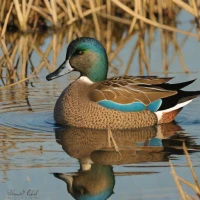
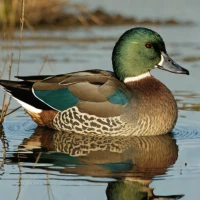
Yes, Cinnamon Teals and Blue-winged Teals are known to interbreed, as they are very closely related genetically. Because their habitats sometimes overlap, particularly in regions like the western United States, hybrid offspring are occasionally documented by birders. Hybrids may display a mix of physical characteristics, such as the blue wing patch of a Blue-winged Teal paired with reddish body plumage.
explore Explore More


Reviews & Comments
Write a Review
Be the first to review
Share your thoughts with the community and help others make better decisions.


