
description Green-winged Teal Overview
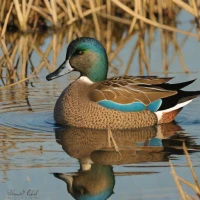
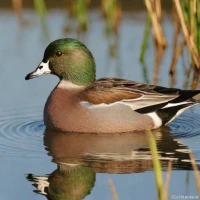
The green-winged teal is the smallest species of dabbling duck native to North America, scientifically classified as Anas crecca. During the breeding season, the male is recognized by its striking green wing patch, cinnamon-colored head, and vertical white stripe on its side. They inhabit shallow wetlands and marshes, feeding on seeds, aquatic invertebrates, and vegetation by dabbling at the water's surface. As a highly migratory bird, it travels in large flocks and can be found wintering as far south as Central America and the Caribbean.
help Green-winged Teal FAQ
How can I identify a male Green-winged Teal?
A breeding male has a cinnamon-colored head with a glossy green patch sweeping back from the eye, a gray body, and a pale vertical bar near the chest. Both sexes reveal a deep-green wing patch called a speculum in flight.
How can I distinguish a female Green-winged Teal from a female Mallard?
The teal is much smaller and more compact, with a relatively small bill and a buff-yellow stripe near the tail. Cornell describes it as North America's smallest dabbling duck, making size especially useful when it is beside Mallards.
Where do Green-winged Teal feed?
They favor shallow ponds, marsh edges, mudflats, and flooded agricultural fields. As dabbling ducks, they collect seeds and small invertebrates at or just below the surface instead of routinely diving.
When is the easiest time to see Green-winged Teal?
Spring and fall migration are productive periods across much of North America because flocks stop at shallow wetlands. Some wintering and migratory concentrations contain thousands of birds.
explore Explore More


Reviews & Comments
Write a Review
Be the first to review
Share your thoughts with the community and help others make better decisions.


